
Curriculum & Media Library

Youth & Community Education Resources

Explore TTCD's complete K-12 STEM curriculum, educational docuseries video playlists, hands-on field inquiry worksheets, and Dena'ina cultural science frameworks.

12 Educational Videos
30 Standards-Aligned Lessons
6 Core STEM Strands
K–12 Grade Levels Supported
TEK Dena'ina Knowledge Integration
TTCD Media & Educational Curriculum

Tyonek Ecosystem & Conservation Video Playlists

Watch official educational docuseries, field science demonstrations, and community conservation workshops produced by the Tyonek Tribal Conservation District. Explore multi-part investigative series on invasive pike, watershed hydrology, soil microbiology, and salmon fisheries engineering.

Invasive Northern Pike Docuseries Chapter 1 of 4 ⏱ 4:21
Open on YouTube

Invasive Pike Chapter 1: Background

Explores the introduction and biological background of invasive Northern Pike (Esox lucius) in Southcentral Alaska and the West Cook Inlet region. Learn why pike are native to northern and interior drainages, but apex apex-predator invaders in Cook Inlet streams where native salmon have not evolved defense mechanisms against their ambush hunting tactics.

Key Scientific Topics
Invasive species ecologyAmbush predator behaviorSouthcentral Alaska geographySalmon juvenile mortality
Audience & Curriculum Alignment

Target Audience: Grades 5-12, University & Community
Standards Alignment: Ecosystem Dynamics, Biological Invasions, Food Webs

Thumbnail for Invasive Pike Chapter 1: Background 4:21
Invasive Northern Pike Docuseries
Invasive Pike Chapter 1: Background

Explores the introduction and biological background of invasive Northern Pike (Esox l...

Thumbnail for Invasive Pike Chapter 2: Debunking Misconceptions 3:50
Invasive Northern Pike Docuseries
Invasive Pike Chapter 2: Debunking Misconceptions

Tackles common myths surrounding Northern Pike in Alaska waters. Clarifies the differ...

Thumbnail for Invasive Pike Chapter 3: Management & Prevention 5:08
Invasive Northern Pike Docuseries
Invasive Pike Chapter 3: Management & Prevention

Highlights the intensive management actions undertaken by TTCD, ADF&G, and regional p...

Thumbnail for Invasive Pike Chapter 4: Pike Camp 4:15
Invasive Northern Pike Docuseries
Invasive Pike Chapter 4: Pike Camp

Takes viewers inside TTCD’s hands-on community Pike Camp in the Tyonek District. Tebu...

Thumbnail for What is a watershed? 3:32
Watershed & Soil Ecosystems
What is a watershed?

A foundational educational video defining how watersheds function across Tyonek and W...

Thumbnail for What is soil health? 4:02
Watershed & Soil Ecosystems
What is soil health?

Dives beneath the surface of the Tyonek community gardens and sub-arctic boreal fores...

Thumbnail for Tyonek Tribal Conservation District - Who We Are 3:45
Watershed & Soil Ecosystems
Tyonek Tribal Conservation District - Who We Are

The official TTCD introduction video showcasing the district’s 6.6 million-acre servi...

Thumbnail for Fish Weirs: How They Work and How to Build One 5:40
Salmon Ecology & Engineering
Fish Weirs: How They Work and How to Build One

Step-by-step engineering and field guide to building and operating salmon enumeration...

Thumbnail for Invasive Plants in Southcentral Alaska 4:10
Invasive Species & Biosecurity
Invasive Plants in Southcentral Alaska

An informative field guide to terrestrial and riparian invasive plant threats in West...

Thumbnail for Elodea Chapter 1: Background & Threat to Alaska 3:55
Invasive Species & Biosecurity
Elodea Chapter 1: Background & Threat to Alaska

Examines Alaska’s first and most dangerous submerged aquatic invasive plant, Elodea. ...

Thumbnail for Elodea Chapter 3: Prevention & Public Involvement 4:45
Invasive Species & Biosecurity
Elodea Chapter 3: Prevention & Public Involvement

Provides actionable guidelines for floatplane pilots, sport fishermen, and community ...

Thumbnail for Erosion in Western Cook Inlet: Interview with Dr. Tom Ravens 6:12
Coastal Science & Climate Research
Erosion in Western Cook Inlet: Interview with Dr. Tom Ravens

In-depth research interview with Dr. Tom Ravens (UAA Coastal Engineering) exploring c...

Hands-on K-12 STEM Curriculum & Virtual Labs

Youth Conservation Science Lessons & Activities

Explore 30 standards-aligned lessons, field inquiry worksheets, STEM lab protocols, and kinesthetic outdoor games developed by TTCD for Tebughna School and Alaskan educators. Launch interactive virtual experiments, comprehension quizzes, and vocabulary decks directly in your browser.

Showing 30 educational resources Click any card to expand full learning targets & materials
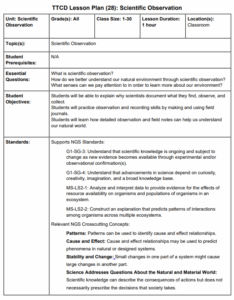
Cover preview for Scientific Observation Ecosystems & Wildlife Outdoor Field Inquiry 🖥️ Walkthrough Slides & Quiz
🎯 Grades K-8 PDF Guide

Scientific Observation

Teaches students how to observe natural phenomena systematically using all five senses without disrupting wildlife. Includes structured field journaling sheets, sketch boxes, qualitative description prompts, and measurement logs tailored for sub-arctic forest and beach ecosystems.
View Learning Objectives & Materials

Key Learning Outcomes:

  • Differentiate between objective scientific observation and subjective inference.
  • Record detailed field sketches with labeled parts, scale references, and environmental parameters.
  • Observe multi-species interactions within a 1-meter micro-plot in the Tyonek forest.

Required Materials:

Field notebookHand lens / magnifierPencil and colored pencilsRuler / tape measure
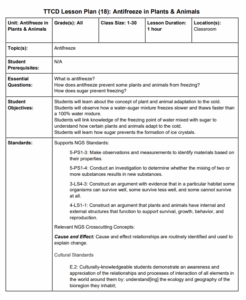
Cover preview for Antifreeze in Plants & Animals Ecosystems & Wildlife STEM Lab 🖥️ Walkthrough Slides & Quiz
🎯 Grades 4-9 PDF Guide

Antifreeze in Plants & Animals

Explores how Alaskan insects (like the Upis beetle) and northern evergreens withstand deep sub-zero conditions without their cellular membranes bursting. Demonstrates freeze tolerance versus freeze avoidance through solute colligative properties.

View Learning Objectives & Materials

Key Learning Outcomes:

  • Understand how glycerol and antifreeze proteins lower the freezing point of intracellular fluids.
  • Conduct an experiment testing freezing temperatures of water versus solutions with varying sugar/salt concentrations.
  • Identify behavioral adaptations animals in Cook Inlet use to survive long freeze cycles.

Required Materials:

Ice cubesSalt and sugarThermometersBeakers / clear cupsFreezer
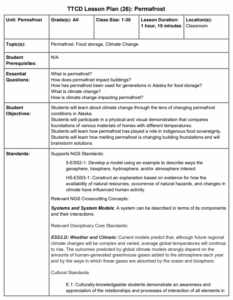
Cover preview for Permafrost & Frozen Ground Ecosystems & Wildlife STEM Lab 🖥️ Walkthrough Slides & Quiz
🎯 Grades 5-10 PDF Guide

Permafrost & Frozen Ground

Hands-on lesson investigating continuous, discontinuous, and sporadic permafrost in Alaska. Students construct layered soil cores, freeze them, and model what happens to roads, buildings, and lake beds when permafrost thaws into thermokarst lakes.

View Learning Objectives & Materials

Key Learning Outcomes:

  • Define permafrost as soil, rock, or sediment remaining below 0°C for two or more consecutive years.
  • Measure active layer thaw depth using soil probing techniques.
  • Model the structural impacts of thaw settlement on sub-arctic village infrastructure.

Required Materials:

Clear plastic cupsPotting soil, gravel, and organic peatWater and freezerSmall toy weights (to simulate houses/roads)
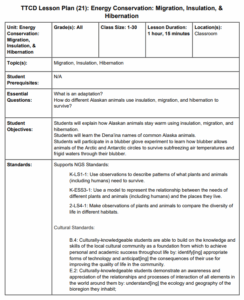
Cover preview for Energy Conservation: Migration, Insulation & Hibernation Ecosystems & Wildlife STEM Lab 🖥️ Walkthrough Slides & Quiz
🎯 Grades 3-8 PDF Guide

Energy Conservation: Migration, Insulation & Hibernation

Investigates how wildlife in Western Cook Inlet manage their caloric budgets through sub-zero winters. Compares the three primary biological survival strategies: migrating south, growing thick insulative fur and blubber, or entering deep torpor and hibernation.

View Learning Objectives & Materials

Key Learning Outcomes:

  • Test different natural and synthetic insulating materials (wool, feathers, fat/Crisco, foam) using warm water beakers.
  • Calculate caloric expenditures of brown bears before entering dens versus spring emergence.
  • Connect animal energy conservation to household winter energy efficiency in remote Alaska communities.

Required Materials:

Crisco vegetable shortening (blubber glove demo)Plastic baggiesIce water bathStopwatchThermometer
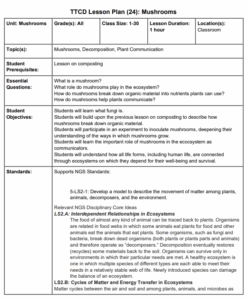
Cover preview for Mushrooms & Sub-Arctic Fungi Ecosystems & Wildlife Outdoor Field Inquiry 🖥️ Walkthrough Slides & Quiz
🎯 Grades 4-10 PDF Guide

Mushrooms & Sub-Arctic Fungi

Field guide and activity exploring the fungal kingdom in Southcentral Alaska boreal forests. Focuses on the role of mycelium as decomposers and mycorrhizal partners to paper birch and white spruce trees, with step-by-step spore printing instructions.

View Learning Objectives & Materials

Key Learning Outcomes:

  • Identify key anatomical parts of a mushroom: cap, gills/pores, stipe, annulus, and underground mycelial network.
  • Create botanical spore prints on paper to observe microscopic spore color variations.
  • Distinguish saprophytic decomposers from mutualistic mycorrhizal species in local forests.

Required Materials:

Fresh mushrooms (store-bought or safely collected with adult supervision)White and black index cardsGlass bowls/cupsHairspray (optional for fixing prints)
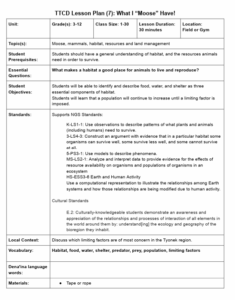
Cover preview for What I "Moose" Have: Habitat Requirements Ecosystems & Wildlife Field Game 🖥️ Walkthrough Slides & Quiz
🎯 Grades K-5 Acrobat Interactive Activity

What I "Moose" Have: Habitat Requirements

An active simulation game teaching the four essential components of wildlife habitat: food, water, cover, and space. Students play moose seeking willow browse and winter shelter while navigating wolves, deep snow, and hunting pressure.

View Learning Objectives & Materials

Key Learning Outcomes:

  • Identify the essential survival needs of Alaska moose (*Alces alces gigas*).
  • Understand how seasonal carrying capacity fluctuates between summer lushness and winter snowpacks.
  • Simulate population cycles when habitat components become limited or fragmented.

Required Materials:

Cones or field markersHabitat token cards (Food, Water, Shelter, Space)Open gym or outdoor field
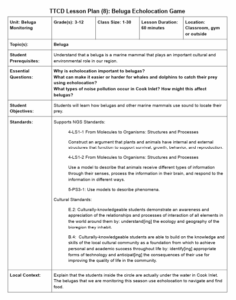
Cover preview for Beluga Echolocation Game Ecosystems & Wildlife Field Game 🖥️ Walkthrough Slides & Quiz
🎯 Grades 2-8 Acrobat Interactive Activity

Beluga Echolocation Game

Interactive sensory game modeling how critically endangered Cook Inlet beluga whales use clicks and melon echolocation to navigate muddy, silt-laden waters and catch salmon without sight.

View Learning Objectives & Materials

Key Learning Outcomes:

  • Explain how sound waves bounce off submerged obstacles and return as audible echoes.
  • Simulate echolocation using verbal acoustic calls and responses (similar to Marco Polo with biological rules).
  • Discuss how anthropogenic acoustic noise (shipping, drilling, outboard motors) disrupts beluga foraging in Cook Inlet.

Required Materials:

BlindfoldsNoise makers / clickersOpen play area free of obstacles
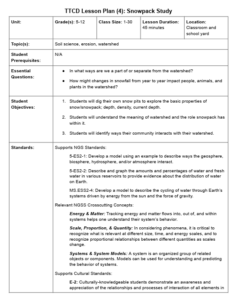
Cover preview for Snowpack Study & Winter Hydrology Ecosystems & Wildlife Outdoor Field Inquiry 🖥️ Walkthrough Slides & Quiz
🎯 Grades 4-12 Acrobat Interactive Activity

Snowpack Study & Winter Hydrology

Field science protocol for digging snow pits, analyzing snow crystal stratigraphy, measuring snow water equivalent (SWE), and predicting spring stream runoff for salmon rivers.

View Learning Objectives & Materials

Key Learning Outcomes:

  • Dig a vertical snow pit to analyze stratigraphic layers and temperature gradients from ground to air.
  • Use a crystal card and 10x loupe to classify snow crystal types (stellar dendrites, faceted crystals, depth hoar).
  • Calculate Snow Water Equivalent (SWE) to estimate volumetric runoff into local streams.

Required Materials:

Snow shovelCrystal screen card & 10x magnifierStem thermometersWeigh scale and snow tube core sampler
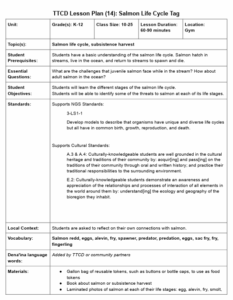
Cover preview for Salmon Life Cycle Tag Fisheries & Water Field Game 🖥️ Walkthrough Slides & Quiz
🎯 Grades K-6 Acrobat Interactive Activity

Salmon Life Cycle Tag

A fast-paced active game illustrating the incredible anadromous life cycle of Alaska salmon from egg (alevin), to fry, smolt, ocean adult, and returning spawner navigating predators and culverts.

View Learning Objectives & Materials

Key Learning Outcomes:

  • Sequence the five primary developmental stages of Pacific salmon.
  • Identify obstacles salmon face during migration: waterfalls, undersized culverts, commercial/subsistence nets, and bears.
  • Demonstrate why only a fraction of eggs survive to reproduce, highlighting the importance of clean gravels.

Required Materials:

Pinnies/jerseys for predatorsRope or chalk to mark stream boundsLife cycle cards
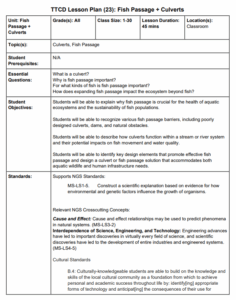
Cover preview for Fish Passage + Culverts Fisheries & Water STEM Lab 🖥️ Walkthrough Slides & Quiz
🎯 Grades 6-12 PDF Guide

Fish Passage + Culverts

Engineering and hydrology worksheet examining how poorly designed corrugated metal road culverts block juvenile and adult salmon. Explores perched outfalls, velocity chutes, and bottomless arch culvert restoration designs.

View Learning Objectives & Materials

Key Learning Outcomes:

  • Calculate water velocity inside circular versus open-bottom culverts using flow equations.
  • Evaluate whether juvenile coho can jump perched culvert outlets based on swim speed capacity.
  • Design a stream simulation arch culvert that mimics natural substrate and stream bed roughness.

Required Materials:

Ruler, protractor, calculatorStream table or sloped gutter demo (optional)Gravel substrate samples
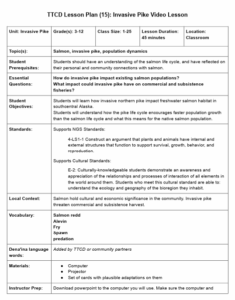
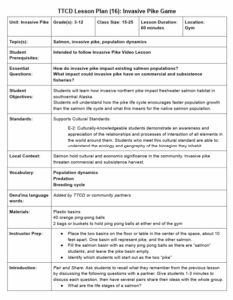
Cover preview for Invasive Pike Video Lesson Invasive Species Classroom Activity 🖥️ Walkthrough Slides & Quiz
🎯 Grades 5-12 Acrobat Interactive Activity

Invasive Pike Video Lesson

Structured companion curriculum worksheet paired with the TTCD Invasive Northern Pike Docuseries. Guides students through video analysis, data interpretation, and regional mapping.

View Learning Objectives & Materials

Key Learning Outcomes:

  • Analyze predator-prey dynamics between introduced Northern Pike and native rearing salmon.
  • Trace the geographic spread of pike across Cook Inlet drainages from the 1950s to present day.
  • Debate the ecological and community trade-offs of chemical (rotenone) vs physical (netting) eradication methods.

Required Materials:

Access to TTCD Pike video playlistPrinted question guideCook Inlet watershed map
Cover preview for Invasive Pike Tag Game Invasive Species Field Game 🖥️ Walkthrough Slides & Quiz
🎯 Grades 3-8 Acrobat Interactive Activity

Invasive Pike Tag Game

Kinesthetic learning game demonstrating ecological disruption in a shallow lake ecosystem. Shows how a single invasive apex predator drastically alters biodiversity and juvenile salmon survivorship.

View Learning Objectives & Materials

Key Learning Outcomes:

  • Experience how unconstrained predation collapses native fish populations.
  • Simulate the role of aquatic vegetation in providing juvenile salmon refugia from pike attacks.
  • Model human intervention when tribal conservation teams deploy gillnets to suppress pike numbers.

Required Materials:

Field conesGreen pinnies (vegetation)Orange pinnies (invasive pike)Tags/wristbands
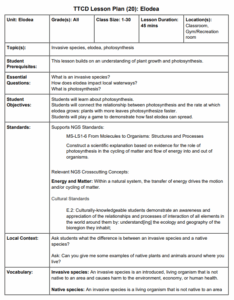
Cover preview for Elodea Aquatic Invasive Plant Study Invasive Species Classroom Activity 🖥️ Walkthrough Slides & Quiz
🎯 Grades 5-11 PDF Guide

Elodea Aquatic Invasive Plant Study

Laboratory and field identification guide detailing Elodea’s vegetative fragmentation reproduction, whorled leaf counts, and difference from native look-alikes like American waterweed and mare’s tail.

View Learning Objectives & Materials

Key Learning Outcomes:

  • Count leaf whorls (3 vs 4-5) to definitively identify invasive *Elodea spp.* under magnification.
  • Explain how tiny broken fragments regenerate into complete new root-bearing plants.
  • Formulate a Clean, Drain, Dry biosecurity checklist for local aircraft and riverboats.

Required Materials:

Magnifying loupe / dissection microscopeSpecimen photos or preserved samplesIdentification flow key
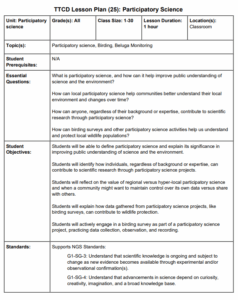
Cover preview for Participatory Science Protocols Ecosystems & Wildlife Community Science 🖥️ Walkthrough Slides & Quiz
🎯 Grades 6-12 PDF Guide

Participatory Science Protocols

Standardized observation guidelines enabling K-12 students and Tebughna community members to record high-value environmental data: ice phenology, spring bird arrivals, stream water temperatures, and berries.

View Learning Objectives & Materials

Key Learning Outcomes:

  • Collect baseline phenology data according to standardized scientific logging protocols.
  • Upload and verify geolocation coordinates using hand-held GPS units and mobile mapping tools.
  • Analyze multi-year trends in local freeze-up and breakup dates on Indian Creek and Tyonek lakes.

Required Materials:

GPS unit / smartphone mapping appField datasheetsCalibrated outdoor thermometer
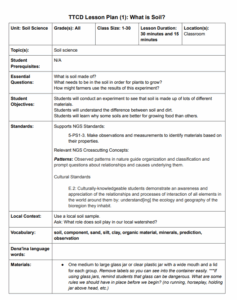
Cover preview for What is Soil? Composition & Profiles Soil & Agriculture STEM Lab 🖥️ Walkthrough Slides & Quiz
🎯 Grades 3-8 Acrobat Interactive Activity

What is Soil? Composition & Profiles

Introduction to soil as a living skin of the earth composed of minerals, air, water, and organic matter. Students excavate small soil pits in the Tyonek garden to examine O, A, B, and C master horizons.

View Learning Objectives & Materials

Key Learning Outcomes:

  • Name the four fundamental components of healthy soil: 45% mineral, 25% air, 25% water, 5% organic matter.
  • Differentiate between topsoil rich in humus and mineral subsoil.
  • Identify how parent material and volcanic ash deposits from Mt. Spurr shape Tyonek soils.

Required Materials:

Trowel or hand shovelWhite paper platesHand lensSoil moisture meter (optional)
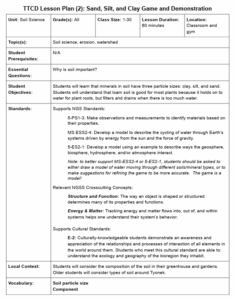
Cover preview for Sand, Silt, and Clay Game & Demonstration Soil & Agriculture Field Game 🖥️ Walkthrough Slides & Quiz
🎯 Grades 2-7 Acrobat Interactive Activity

Sand, Silt, and Clay Game & Demonstration

Kinesthetic lesson demonstrating relative particle sizes. Sand particles act like beach balls, silt like frisbees, and clay like microscopic coins, showing why water drains fast through sand and clings tightly to clay.

View Learning Objectives & Materials

Key Learning Outcomes:

  • Contrast particle dimensions of sand (0.05-2.0mm), silt (0.002-0.05mm), and clay (<0.002mm).
  • Conduct the "Soil Ribbon Test" using moist garden soil to determine soil texture by feel.
  • Understand why loamy soils provide optimal water retention and root aeration for vegetables.

Required Materials:

Balls of different sizes (basketball, tennis ball, BB pellet)Soil samplesWater spray bottles
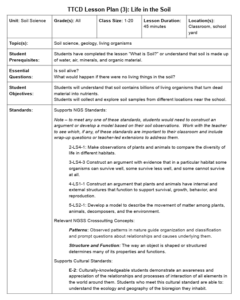
Cover preview for Life in the Soil: The Decomposer Web Soil & Agriculture Outdoor Field Inquiry 🖥️ Walkthrough Slides & Quiz
🎯 Grades 3-9 Acrobat Interactive Activity

Life in the Soil: The Decomposer Web

Exploration of macro-invertebrates and micro-organisms living in healthy garden compost and forest litter. Students build Berlese funnels to extract and classify springtails, mites, nematodes, and earthworms.

View Learning Objectives & Materials

Key Learning Outcomes:

  • Construct a simple Berlese funnel to sample subterranean micro-arthropods safely.
  • Diagram the soil food web showing primary, secondary, and tertiary decomposers.
  • Explain how earthworm burrowing improves soil aeration and nutrient cycling.

Required Materials:

Plastic soda bottle (cut in half)Mesh wire screenGooseneck lampSmall collection vial with rubbing alcohol or water
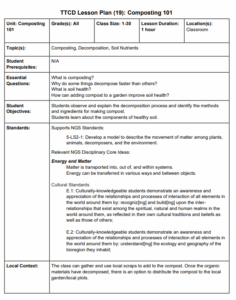
Cover preview for Composting 101: Building Cold-Climate Piles Soil & Agriculture STEM Lab 🖥️ Walkthrough Slides & Quiz
🎯 Grades 4-12 PDF Guide

Composting 101: Building Cold-Climate Piles

Practical guide to constructing and managing aerated compost piles in cold-climate Alaska. Covers balancing carbon-rich brown materials with nitrogen-rich greens, integrating clean fish scraps, and monitoring core temperatures.

View Learning Objectives & Materials

Key Learning Outcomes:

  • Calculate a balanced 30:1 Carbon-to-Nitrogen (C:N) ratio for rapid thermal composting.
  • Track internal compost pile temperatures through mesophilic and thermophilic stages (reaching 130-150°F to kill weed seeds).
  • Apply finished rich compost to community garden beds to replace depleted nutrients.

Required Materials:

Long-stem compost thermometerBrown materials (shredded cardboard, dry leaves, straw)Green materials (garden scraps, coffee grounds)Water sourcePitchfork
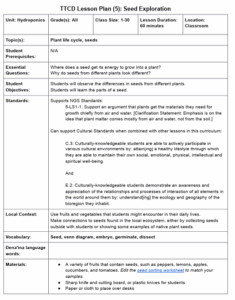
Cover preview for Seed Exploration & Germination Biology Soil & Agriculture STEM Lab 🖥️ Walkthrough Slides & Quiz
🎯 Grades K-6 Acrobat Interactive Activity

Seed Exploration & Germination Biology

Anatomy and germination lab dissecting soaked lima beans. Students identify the seed coat (testa), stored food supply (cotyledon), and dormant embryo, then test environmental triggers required for germination.

View Learning Objectives & Materials

Key Learning Outcomes:

  • Dissect a dicot seed and sketch the embryo leaf (plumule) and root (radicle).
  • Test germination rates under varying temperature, light, and moisture levels.
  • Explain how cold stratification breaks dormancy for native Alaskan seeds.

Required Materials:

Soaked large lima beansHand lensesPlastic zip baggies and paper towelsSeed packets
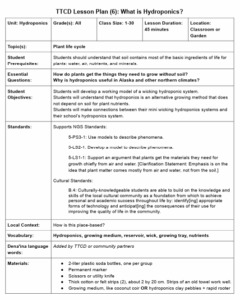
Cover preview for What is Hydroponics? Soil-less Growing Soil & Agriculture STEM Lab 🖥️ Walkthrough Slides & Quiz
🎯 Grades 5-12 Acrobat Interactive Activity

What is Hydroponics? Soil-less Growing

Introduces advanced controlled-environment agriculture used in remote northern climates. Students build a desktop Deep Water Culture (DWC) or Kratky hydroponic unit to grow lettuce and fresh greens year-round.

View Learning Objectives & Materials

Key Learning Outcomes:

  • Compare nutrient uptake in soil versus recirculating oxygenated nutrient solutions.
  • Measure and balance pH (5.5-6.5) and electrical conductivity (EC) in hydroponic reservoirs.
  • Evaluate how indoor hydroponics supports winter food sovereignty in rural Alaska.

Required Materials:

Mason jar or dark bucketNet pots and rockwool/clay pebblesLiquid hydroponic nutrient solutionpH test kit
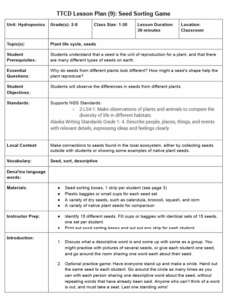
Cover preview for Seed Sorting & Dispersal Mechanisms Soil & Agriculture Classroom Activity 🖥️ Walkthrough Slides & Quiz
🎯 Grades K-5 Acrobat Interactive Activity

Seed Sorting & Dispersal Mechanisms

Classification game examining evolutionary adaptations of seeds: wind flyers (dandelion, fireweed), animal hitchhikers (burdock, cleavers), water floaters, and animal-eaten berry seeds.

View Learning Objectives & Materials

Key Learning Outcomes:

  • Sort seeds by physical characteristics: size, shape, weight, and surface texture.
  • Match seed shapes to their primary dispersal method (wind, water, animal fur, animal ingestion).
  • Test homemade model seeds in front of a fan to measure aerodynamic flight distance.

Required Materials:

Assorted seeds (sunflower, bean, poppy, dandelion, cocklebur)Paper, tape, feathers for building model seedsSmall electric fan
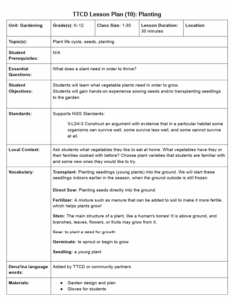
Cover preview for Planting Seeds & Seedling Care Soil & Agriculture STEM Lab 🖥️ Walkthrough Slides & Quiz
🎯 Grades K-8 Acrobat Interactive Activity

Planting Seeds & Seedling Care

Practical gardening guide covering seed sowing depth, tray moisture management, hardening off transplants, and soil temperature thresholds for Tyonek community garden crops.

View Learning Objectives & Materials

Key Learning Outcomes:

  • Apply the rule of thumb for sowing depth (planting depth equals 2-3 times seed diameter).
  • Demonstrate gentle watering techniques to avoid dislodging fine root hairs.
  • Explain the "hardening off" process that prepares tender greenhouse starts for outdoor coastal winds.

Required Materials:

Seed starter trays / egg cartonsSeed starting sterile mixCold-hardy seeds (kale, peas, carrots, cabbage)Spray mister
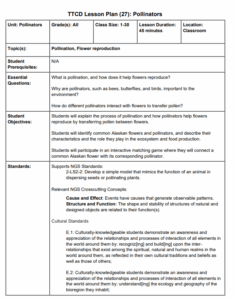
Cover preview for Native Pollinators in Alaska Ecosystems Soil & Agriculture Outdoor Field Inquiry 🖥️ Walkthrough Slides & Quiz
🎯 Grades 3-9 PDF Guide

Native Pollinators in Alaska Ecosystems

Explores the vital role of native sub-arctic bumblebees (*Bombus*), syrphid hoverflies, and solitary bees in pollinating wild salmonberries, blueberries, highbush cranberries, and cultivated vegetable crops.

View Learning Objectives & Materials

Key Learning Outcomes:

  • Identify queen, worker, and drone bumblebees and their cold-weather shivering thermogenesis.
  • Map flower-pollinator interactions in the Tyonek garden and tundra meadow.
  • Construct a native solitary bee nesting block to provide overwintering habitat.

Required Materials:

Untreated wood blocks & drill bitsPaper straw nesting tubesMagnifying hand lensPollinator identification sheet
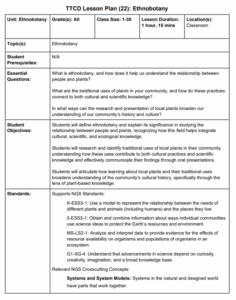
Cover preview for Dena’ina Ethnobotany & Traditional Plants Food Systems & Ethnobotany Outdoor Field Inquiry 🖥️ Walkthrough Slides & Quiz
🎯 Grades 4-12 PDF Guide

Dena’ina Ethnobotany & Traditional Plants

Comprehensive overview of traditional plant use by the Tebughna people of Cook Inlet. Details traditional harvesting ethics, seasonal calendars, medicinal preparations (wormwood, Labrador tea), and fiber/craft uses (spruce root, birch bark).

View Learning Objectives & Materials

Key Learning Outcomes:

  • Identify 10 indigenous plants utilized traditionally by the Tebughna Dena’ina.
  • Practice honorable harvesting ethics: never take the first or last plant, take only what is needed, and leave roots intact.
  • Connect traditional plant knowledge to modern nutritional and ecological sciences.

Required Materials:

Plant identification cardsCollection bags (for authorized small samples)Pressing paper or plant press
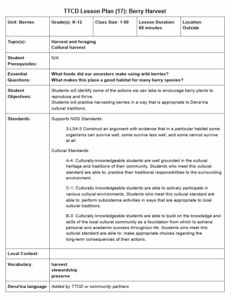
Cover preview for Wild Berry Harvest & Identification Food Systems & Ethnobotany Outdoor Field Inquiry 🖥️ Walkthrough Slides & Quiz
🎯 Grades 2-9 Acrobat Interactive Activity

Wild Berry Harvest & Identification

Field identification sheet covering Western Cook Inlet’s edible wild berries: salmonberries (cloudberries), bog blueberries, crowberries, lowbush cranberries (lingonberries), and highbush cranberries, along with toxic look-alikes like baneberry.

View Learning Objectives & Materials

Key Learning Outcomes:

  • Accurately identify 6 major wild berry species in muskeg, forest, and coastal bluff habitats.
  • Recognize toxic species (such as red and white baneberry) and learn safety rules.
  • Document harvest quantities and understand traditional storage methods (freezing, drying, oil-packing).

Required Materials:

Clean harvesting buckets/basketsField visual guideHand wipes
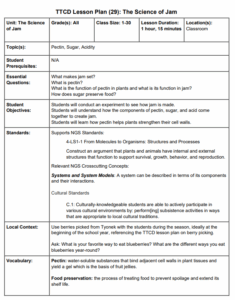
Cover preview for The Science of Jam: Pectin & Preservation Food Systems & Ethnobotany STEM Lab 🖥️ Walkthrough Slides & Quiz
🎯 Grades 4-10 PDF Guide

The Science of Jam: Pectin & Preservation

Kitchen chemistry curriculum exploring the molecular science of food preservation. Explores how natural fruit pectin, sugar concentrations, boiling temperature (220°F gelling point), and acidity create a stable fruit gel.

View Learning Objectives & Materials

Key Learning Outcomes:

  • Explain how pectin molecules link in an acidic environment to trap liquid and form a culinary gel.
  • Measure pH of wild berries and determine when supplemental lemon juice is required.
  • Demonstrate sterile water-bath canning safety to prevent spoilage and botulism.

Required Materials:

Wild berries or store-bought fruitSugar and pectinSaucepan and stoveCandy thermometerCanning jars
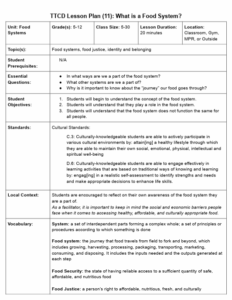
Cover preview for What is a Food System? Local vs Global Food Systems & Ethnobotany Classroom Activity 🖥️ Walkthrough Slides & Quiz
🎯 Grades 5-11 Acrobat Interactive Activity

What is a Food System? Local vs Global

Compares the fragile global food supply chain that barges groceries into Anchorage and flies them to remote villages against Tyonek’s resilient dual-pillar local system: wild subsistence harvesting and community agriculture.

View Learning Objectives & Materials

Key Learning Outcomes:

  • Trace the journey of commercial produce shipped 2,500+ miles from California/Mexico to rural Alaska.
  • Calculate the environmental, carbon, and financial cost of remote airfreight food delivery.
  • Explain how Tyonek Grown solar high-tunnels and potato fields strengthen community resilience during shipping interruptions.

Required Materials:

World map and Alaska mapGrocery store labels showing origin pointsColored yarn for mapping supply lines
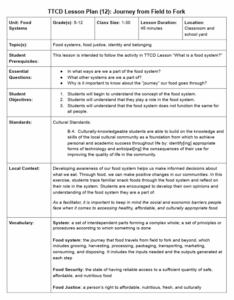
Cover preview for Journey from Field to Fork Food Systems & Ethnobotany Classroom Activity 🖥️ Walkthrough Slides & Quiz
🎯 Grades 2-7 Acrobat Interactive Activity

Journey from Field to Fork

Visual sequencing activity tracing vegetables from seed selection in early spring, planting in high tunnels, weeding and watering, harvesting, washing, packing, and cooking nutritious meals at the Tebughna School.

View Learning Objectives & Materials

Key Learning Outcomes:

  • Sequence the six agricultural steps: Planning, Sowing, Tending, Harvesting, Processing, and Consuming.
  • Identify career pathways in community agriculture, soil science, and farm management.
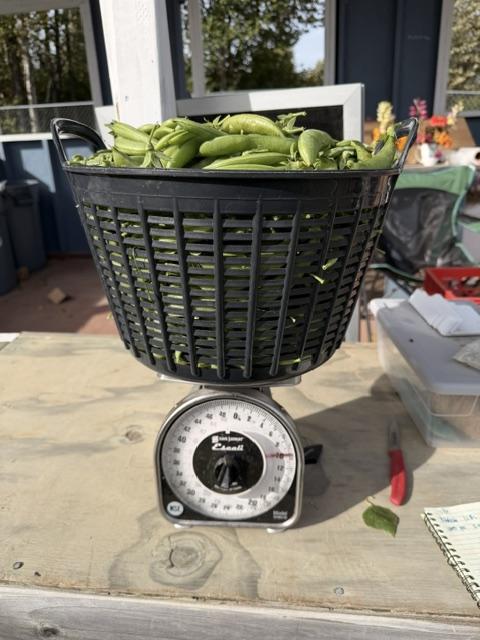
  • Participate in preparing a fresh harvest salad utilizing crops grown at Tyonek Grown.

Required Materials:

Printable illustrated story cardsKitchen measuring toolsFresh garden vegetables for tasting
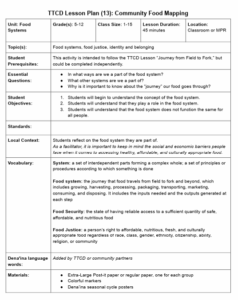
Cover preview for Community Food Mapping Food Systems & Ethnobotany Community Science 🖥️ Walkthrough Slides & Quiz
🎯 Grades 6-12 Acrobat Interactive Activity

Community Food Mapping

Cartographic and community inquiry project where youth interview elders and map traditional salmon fish camps, berry ridges, moose browse corridors, community potato patches, and seasonal distribution networks.

View Learning Objectives & Materials

Key Learning Outcomes:

  • Interview family members and elders respecting cultural protocols and confidentiality of sacred harvest locations.
  • Create spatial GIS or drawn thematic maps illustrating local food access, storage, and sharing networks.
  • Quantify the percentage of household meals sourced locally from land and sea versus store-bought.

Required Materials:

Base maps of Tyonek & Cook InletColor highlighters and symbology keysElder interview protocol sheet
Cover preview for Dena’ina Cultural Components of Lesson Plans Dena’ina Culture & TEK Classroom Activity 🖥️ Walkthrough Slides & Quiz
🎯 Grades K-12 & Educators PowerPoint Presentation

Dena’ina Cultural Components of Lesson Plans

The master cultural framework presentation guiding educators on embedding Dena’ina language, Tebughna values, seasonal cycles, and traditional ecological knowledge (TEK) directly into Western STEM lessons.

View Learning Objectives & Materials

Key Learning Outcomes:

  • Integrate Dena’ina vocabulary for key ecosystem elements (*liq’a* for salmon, *ti* for water, *k’eghash* for berry) into daily science routines.
  • Structure curriculum around the Dena’ina Seasonal Round: Spring fish camps, summer berry and king runs, fall moose and silver salmon harvest, and winter storytelling and trap lines.
  • Instill the core cultural ethos: "Take care of the land, and the land will take care of you."

Required Materials:

Presentation slides (.pptx)Dena’ina audio pronunciation guidesClassroom vocabulary cards
Dena'ina Cultural Components of Lesson Plans Presentation Title Slide
Curriculum Presentation (.pptx)
🗣️ Explore Interactive Deck & Audio (14 Slides) Download Master Presentation (.PPTX) File size: 3.3 MB • Includes speaker notes & vocabulary guide
Traditional Ecological Knowledge (TEK) & Tebughna Heritage

Dena’ina Cultural Components: Youth Conservation Science Lessons

Science in Tyonek does not exist in isolation from culture. For centuries, the Tebughna ("People of the Beach") have practiced deep ecological stewardship across the rivers, muskegs, and marine waters of Western Cook Inlet.

🪶

Indigenous Seasonal Rounds

Lessons correspond directly with the ecological harvest calendar: King salmon arrival in May/June, berry gathering in late July/August, moose and silver salmon harvest in September, and winter subsistence trapping.

🗣️

Dena’ina Language Integration

Every science unit introduces local Dena’ina terminology for organisms and geological landmarks, reinforcing dialect preservation and native language acquisition for K-12 youth.

🌲

Reciprocal Stewardship Ethics

Students learn the foundational Native value of reciprocity: taking only what is needed, sharing harvests with village elders first, and maintaining clean water for future generations of fish and people.

"Our ancestors understood the watershed long before Western science coined the term. Integrating Dena’ina knowledge empowers our youth to be both modern scientists and faithful custodians of our homeland."
Botanical Knowledge

Tebughna Plant Lore & Ethnobotany Guide

Study the traditional uses, harvesting practices, and ecological relationships of plants native to Tyonek and the West Cook Inlet watershed.

Dena'ina Traditional Science

🌿 Tebughna Ethnobotany & Native Plant Guide

Exploring traditional Alaskan plants gathered across the Tyonek District, combining indigenous ecological knowledge with natural resource conservation.

Fiddlehead Fern (Ostrich Fern)
🗓️ May (Early Spring)

Fiddlehead Fern (Ostrich Fern)

Dena'ina: "Ch'ixht'i" (Matteuccia struthiopteris)

Harvested in early spring before fronds unfurl. High in iron, potassium, and vitamins A & C. Prepared by boiling and sautéing.

Labrador Tea (Hudson's Bay Tea)
🗓️ Spring to Fall

Labrador Tea (Hudson's Bay Tea)

Dena'ina: "Lida K'el'i" (Rhododendron groenlandicum)

Aromatic evergreen leaves steeped as a traditional soothing herbal tea for respiratory health and cold remedies.

Wild Salmonberry
🗓️ July to August

Wild Salmonberry

Dena'ina: "Q'adaxht'i" (Rubus spectabilis)

Juicy golden and ruby berries gathered in mid-summer. Eaten fresh, preserved into jams, or mixed with wild salmon dishes.

Alaskan Wild Raspberry
🗓️ August

Alaskan Wild Raspberry

Dena'ina: "Dach'ekh" (Rubus strigosus)

Harvested along stream banks and high tunnel perimeters for high-vitamin summer snacks and traditional desserts.

Explore Additional TTCD Resource Collections