
Soil & Agriculture 🎯 Grades 4-12 ⏱️ 1 hour 15 minutes 👥 1-30 students

Composting 101: Building Cold-Climate Piles

Soil Microbiology & Regenerative Agriculture • Tyonek Tribal Conservation District Curriculum

Interactive Digital Curriculum

Interactive Walkthrough Slides

Step through the complete digitized curriculum deck with illustrated concepts, step-by-step procedures, teacher tips, and interactive knowledge checks.

🖥️ Interactive Walkthrough Slides
Slide 1 of 6
Download PDF
Slide 1 Soil Regeneration

Composting 101: Building Cold-Climate Piles

Transforming Village Scraps into Living Organic Fertilizer

Composting is the aerobic biological decomposition of organic waste into rich, dark, earthy humus.

In sub-arctic Tyonek, building hot thermal compost piles allows growers to turn kitchen vegetable scraps, cardboard, and fish waste into premium organic fertilizer for community greenhouse crops.

  • 🔥
    Microbial Furnace: Billions of thermophilic bacteria generate heat up to 150°F inside the pile!
  • ♻️
    Zero Waste: Diverts tons of organic matter away from village disposal sites.
← / → Navigate slides F Fullscreen Esc Exit fullscreen
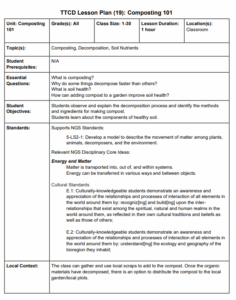
Official curriculum guide preview for Composting 101: Building Cold-Climate Piles
📄 Composting-101-2.pdf

Essential Inquiries & Learning Targets

Core Essential Questions:

  • What biological balance of Carbon (browns) and Nitrogen (greens) creates optimal thermophilic decomposition?
  • How do aerobic bacteria generate high core temperatures (130-155°F) that kill weed seeds and pathogens in cold sub-arctic climates?
  • How can rural communities incorporate clean fish waste and garden residues into rich organic humus without attracting wildlife?

Student Learning Objectives:

  • Calculate a balanced 30:1 Carbon-to-Nitrogen (C:N) ratio using available local feedstock.
  • Track compost temperature curves through mesophilic, thermophilic, and curing phases.
  • Evaluate how Tyonek Grown replaces expensive imported chemical fertilizers with closed-loop community compost.
Interactive Experiment

Virtual Laboratory Simulator

🔬 Hands-on Virtual STEM Lab Regenerative Soil Builder

30:1 C:N Pile Balancer & Thermal Simulator

Mix carbon browns (birch leaves, cardboard, sawdust) with nitrogen greens (garden scraps, salmon waste, coffee grounds) to achieve the 30:1 sweet spot and reach 140°F core heat.

Feedstock Recipe (Pounds Added):

Calculated C:N Ratio: 29.4 : 1
Core Temperature: 142°F (Thermophilic)
Decomposition: Optimal Pasteurization ✓
♨ 142°F ♨
Soil Biology: A 29.4:1 ratio hits the exact microbial sweet spot. Bacteria multiply exponentially, generating 142°F core heat that neutralizes weed seeds while converting fish proteins into rich dark humus.
Self-Grading Assessment

Comprehension Mastery Quiz

Test student understanding of scientific principles, local Alaska ecology, and problem-solving scenarios from the lesson guide. Earn the Regenerative Soil Builder credential!

📝 Comprehension Mastery Quiz Question 1 of 2

What is the scientifically optimal Carbon-to-Nitrogen (C:N) ratio for rapid, hot aerobic composting?

Terminology & Dena’ina Context

Specialized Vocabulary Flashcards

🗂️ Interactive Vocabulary Deck Card 1 of 3

Click the card or press Space to flip. Use arrow keys to navigate.

Term Click to flip ↷

Carbon-to-Nitrogen (C:N) Ratio

Definition & Context Click to flip ↶

The chemical ratio of carbon-rich energy materials (browns) to nitrogen-rich microbial protein building blocks (greens). The biological sweet spot is 25:1 to 30:1.

Alaska Context:

Too much carbon slows decomposition to a crawl; too much nitrogen creates smelly anaerobic ammonia gas.

Educator Guide

Curriculum Standards & Activity Protocol

📚 Standards Alignment (NGSS & Alaska Cultural Standards)

5-LS2-1

Develop a model to describe the movement of matter among plants, animals, decomposers, and the environment.

NGSS
MS-ESS3-3

Apply scientific principles to design a method for monitoring and minimizing human environmental impact.

NGSS
Cultural Standard E.2

Culturally-knowledgeable students understand the ecology and geography of the bioregion they inhabit.

Cultural

🏔️ Local Alaskan & Tebughna Context

  • Shipping bagged synthetic fertilizer from the Lower 48 to Tyonek across Cook Inlet is expensive and carbon-intensive.
  • Subsistence salmon filleting and high tunnel vegetable harvests generate large volumes of nutrient-dense organic waste.
  • Careful pile management (aeration, brown carbon cap layers, bear-safe fencing) turns salmon carcasses into rich, weed-free garden compost.

📦 Required Materials & Classroom Setup

✓ Long-stem dial compost thermometer (18-24 inch probe)✓ Brown carbon materials (shredded cardboard, dry leaves, clean wood shavings)✓ Green nitrogen materials (vegetable trimmings, coffee grounds, clean fish scraps)✓ Garden pitchfork and water hose / watering can

🔬 Step-by-Step Hands-on Activity Guide

  1. Step 1: Layer Browns and Greens

    Build alternating lasagna layers: 4 inches of dry carbon browns, followed by 1-2 inches of green nitrogen waste. Moisten until damp like a wrung-out sponge.

    💡 Instructor Tip: Always cap fish waste with at least 8 inches of clean dry leaves or sawdust to trap odors.

  2. Step 2: Insert Probe and Log Temperatures

    Insert the thermometer probe into the dead center of the pile. Record temperature daily at 9:00 AM.

    💡 Instructor Tip: Within 48-72 hours, aerobic bacteria will drive temperatures past 130°F!

  3. Step 3: Turn and Aerate

    When core temperature begins dropping below 110°F, turn the pile inside-out using a pitchfork to re-introduce oxygen.

    💡 Instructor Tip: Notice steam rising from the center even on a brisk morning.

💬 Wrap-Up Discussion & Evidence of Learning

Discussion Questions:

  • How does composting fish scraps close the nutrient loop in Tyonek?
  • Why is synthetic fertilizer worse for soil microbiology than living organic compost?

Evidence of Learning Rubric:

  • Student can categorize feedstock into "Browns" vs "Greens".
  • Student can graph a compost heat curve through all three phases.
← All Youth Lessons & Resources