
Soil & Agriculture 🎯 Grades K-8 ⏱️ 45 minutes 👥 1-20 students

Life in the Soil & Belowground Food Webs

Soil Science & Microbiology • Tyonek Tribal Conservation District Curriculum

Interactive Digital Curriculum

Interactive Walkthrough Slides

Step through the complete digitized curriculum deck with illustrated concepts, step-by-step procedures, teacher tips, and interactive knowledge checks.

🖥️ Interactive Walkthrough Slides
Slide 1 of 6
Download PDF
Slide 1 Ecological Discovery

The Hidden Jungle Beneath Our Feet

Biodiversity in the Sub-Arctic Soil Food Web

When you walk through the Tyonek birch and spruce forests, you are walking on top of a bustling underground metropolis.

One tablespoon of soil contains billions of bacteria, millions of fungi, thousands of protozoa, and hundreds of nematodes and micro-arthropods.

  • 🍂
    Recycling Crew: Without soil decomposers, fallen autumn leaves and dead trees would pile up miles high!
  • 🍄
    Living Bridge: Fungi mycelium connect tree roots together, sharing water and chemical defense signals.
← / → Navigate slides F Fullscreen Esc Exit fullscreen
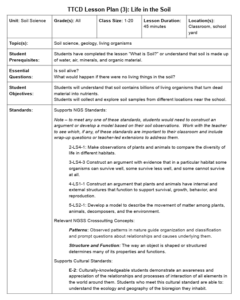
Official curriculum guide preview for Life in the Soil & Belowground Food Webs
📄 3.-Life-in-the-Soil.pdf

Essential Inquiries & Learning Targets

Core Essential Questions:

  • What living organisms inhabit healthy soil beneath our feet?
  • How do decomposers like earthworms, fungi, and bacteria recycle dead plant matter into plant nutrients?
  • What is the 'Soil Your Undies' experiment, and what does cotton decomposition reveal about soil biological activity?

Student Learning Objectives:

  • Identify primary producers, primary consumers, and decomposers in the soil food web.
  • Extract and examine soil macroinvertebrates using white trays, magnifiers, and bug boxes.
  • Design a buried cotton decomposition experiment to quantify microbial activity in local soils.
Self-Grading Assessment

Comprehension Mastery Quiz

Test student understanding of scientific principles, local Alaska ecology, and problem-solving scenarios from the lesson guide. Earn the Life in the Soil & Belowground Food Webs Master credential!

📝 Comprehension Mastery Quiz Question 1 of 1

What is the primary role of decomposers in a forest ecosystem?

Terminology & Dena’ina Context

Specialized Vocabulary Flashcards

🗂️ Interactive Vocabulary Deck Card 1 of 3

Click the card or press Space to flip. Use arrow keys to navigate.

Term Click to flip ↷

Soil Food Web

Definition & Context Click to flip ↶

The community of organisms living all or part of their lives in the soil, converting organic residue into plant nutrients.

Alaska Context:

Ecology

Educator Guide

Curriculum Standards & Activity Protocol

📚 Standards Alignment (NGSS & Alaska Cultural Standards)

5-LS2-1

Develop a model to describe the movement of matter among plants, animals, decomposers, and the environment.

NGSS

🏔️ Local Alaskan & Tebughna Context

  • In cold sub-arctic soils, biological decomposition is slower than in warm climates, making organic mulch and living roots vital for preserving heat and biology.
  • Tyonek community gardens use vermicomposting (worm bins) to turn cafeteria fruit scraps into nutrient-rich worm castings.

📦 Required Materials & Classroom Setup

✓ 100% white cotton underwear or fabric squares✓ Soil trowels✓ White plastic sorting trays✓ Hand magnifiers✓ Tweezers✓ Rulers

🔬 Step-by-Step Hands-on Activity Guide

  1. Step 1: Bury Cotton

    Bury 100% cotton fabric 3 inches deep in garden vs compacted pathway.

  2. Step 2: Core Sampling

    Extract soil core and place on white tray.

  3. Step 3: Organism Hunt

    Use hand lens to find and count worms, beetles, and fungal hyphae.

  4. Step 4: Exhumation

    After 60 days, exhume cotton and calculate percentage degraded.

💬 Wrap-Up Discussion & Evidence of Learning

Discussion Questions:

  • What surprised you most about the tiny organisms living in a single handful of soil?
  • How can human practices harm or help the soil food web?

Evidence of Learning Rubric:

  • Student accurately categorizes at least 3 soil organisms and their ecological roles.
  • Student explains the biological meaning of cotton breakdown in the 'Soil Your Undies' test.
← All Youth Lessons & Resources