
Energy Conservation: Insulation, Torpor & Migration
Sub-Arctic Wildlife Ecology & Energetics • Tyonek Tribal Conservation District Curriculum
Interactive Walkthrough Slides
Step through the complete digitized curriculum deck with illustrated concepts, step-by-step procedures, teacher tips, and interactive knowledge checks.
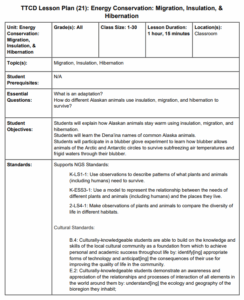
Essential Inquiries & Learning Targets
Core Essential Questions:
- How do sub-arctic animals balance their caloric energy budgets when food disappears under winter snow?
- What are the advantages and physiological trade-offs of migrating south, entering deep hibernation/torpor, or staying active with insulative blubber and fur?
- How does animal insulation (down feathers, dense fur, adipose blubber) compare to energy conservation in rural Alaskan homes?
Student Learning Objectives:
- Quantify thermal conductivity and heat loss across biological materials (wool, down, blubber/Crisco, synthetic foam).
- Conduct the "Crisco Blubber Glove" ice water test to experience marine mammal insulation firsthand.
- Calculate caloric deficit of brown bears during denning and connect animal thermoregulation to household winter efficiency.
Virtual Laboratory Simulator
Crisco Blubber Glove & Insulation Lab
Test the insulative efficacy of bare skin vs wool, feathers, and Crisco vegetable shortening (simulated blubber) immersed in ice water.
Field Inquiry Parameters:
Explore step-by-step variables, observation metadata, and field testing protocols directly from the official TTCD curriculum guide.
📋 Protocol Checklist
- Follow teacher safety guidance and ethical collection standards.
- Record 3 independent trials for data repeatability.
- Compare local Tyonek observations with published Alaska State Standards.
Comprehension Mastery Quiz
Test student understanding of scientific principles, local Alaska ecology, and problem-solving scenarios from the lesson guide. Earn the Thermal Energy Specialist credential!
Why do moose and caribou winter hairs insulate far better than human hair?
Specialized Vocabulary Flashcards
Click the card or press Space to flip. Use arrow keys to navigate.
Blubber
A thick, vascularized layer of adipose fat tissue directly beneath the skin of marine mammals that provides buoyancy, energy storage, and extreme thermal insulation.
Cook Inlet beluga whales can have blubber layers up to 4 inches thick to insulate against freezing seawater.
Curriculum Standards & Activity Protocol
📚 Standards Alignment (NGSS & Alaska Cultural Standards)
Construct an argument that plants and animals have internal and external structures that function to support survival, growth, behavior, and reproduction.
NGSSApply scientific principles to design, construct, and test a device that either minimizes or maximizes thermal energy transfer.
NGSSCulturally-knowledgeable students understand the ecology and geography of the bioregion they inhabit.
Cultural🏔️ Local Alaskan & Tebughna Context
- Cook Inlet beluga whales, seals, and sea otters thrive in 30°F marine waters through heavy subcutaneous blubber and dense pelage.
- Moose in the Tyonek flats grow hollow-shaft winter hairs that trap air, preventing body heat from escaping into sub-zero blizzards.
- Brown bears on the Chakachatna River gorge on late silver salmon runs to amass up to 4 inches of fat before entering hillside dens.
📦 Required Materials & Classroom Setup
🔬 Step-by-Step Hands-on Activity Guide
- Step 1: Construct the Blubber Glove
Fill one ziplock bag with 2-3 cups of Crisco. Invert a second bag inside it and spread the Crisco evenly between the bags. Tape the cuffs so hands stay clean.
💡 Instructor Tip: Ensure no bare spots exist around the fingers.
- Step 2: Bare Hand Ice Test
Place a bare hand (protected only by a thin empty ziplock bag) into the ice water. Time how many seconds until cold discomfort triggers withdrawal.
💡 Instructor Tip: Most students withdraw within 15-30 seconds.
- Step 3: Blubber Glove Immersion
Insert hand into the Crisco blubber glove and submerge fully in the ice water for 2-3 minutes. Observe thermal comfort.
💡 Instructor Tip: Notice that the hand feels completely warm even in freezing slush!
💬 Wrap-Up Discussion & Evidence of Learning
Discussion Questions:
- How does subcutaneous blubber allow marine mammals to dive into freezing Arctic seas without hypothermia?
- How can homeowners in Tyonek apply insulation principles (R-value, sealing drafts) to reduce expensive heating fuel bills?
Evidence of Learning Rubric:
- Student can graph hand endurance time: bare hand vs blubber glove.
- Student explains the relationship between fat layers, energy conservation, and winter survival.