
Soil & Agriculture 🎯 Grades 2-8 ⏱️ 30 minutes 👥 1-30 students

Seed Sorting & Botanical Diversity

Plant Science & Taxonomy • Tyonek Tribal Conservation District Curriculum

Interactive Digital Curriculum

Interactive Walkthrough Slides

Step through the complete digitized curriculum deck with illustrated concepts, step-by-step procedures, teacher tips, and interactive knowledge checks.

🖥️ Interactive Walkthrough Slides
Slide 1 of 6
Download PDF
Slide 1 Botanical Morphology

The Infinite Variety of Seeds

Form Follows Function in Plant Dispersal

Look closely at a handful of assorted seeds: some are as tiny as dust specks (orchid and poppy seeds), while others are massive and heavy like coconuts or avocados.

Every curve, ridge, barb, and aerodynamic wing on a seed has evolved over millions of years to ensure the seed escapes from the shadow of its parent plant.

  • 💨
    Wind Drifters: Equipped with silky hairs or paper-thin wings (fireweed, dandelion, spruce).
  • 🐾
    Hitchhikers: Armed with barbed hooks that cling to moose fur and hikers' socks (burdock, bedstraw).
  • 🫐
    Fruit Sweeteners: Packaged inside delicious berries so birds and bears eat them and deposit them with fertilizer.
← / → Navigate slides F Fullscreen Esc Exit fullscreen
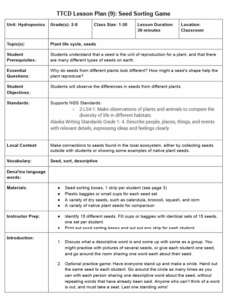
Official curriculum guide preview for Seed Sorting & Botanical Diversity
📄 9.-Seed-Sorting-Game.pdf

Essential Inquiries & Learning Targets

Core Essential Questions:

  • Why do seeds exhibit such a vast range of shapes, sizes, textures, and protective coatings?
  • How do seed morphological adaptations correspond to dispersal mechanisms (wind, water, animal fur, digestion)?
  • How do farmers sort and preserve seeds for high-latitude agricultural success?

Student Learning Objectives:

  • Classify seed varieties based on observable morphological characteristics (size, shape, color, texture).
  • Participate in the Blindfolded Tactile Seed Sorting challenge to distinguish seeds by touch alone.
  • Explain the distinction between monocot and dicot seed structures.
Self-Grading Assessment

Comprehension Mastery Quiz

Test student understanding of scientific principles, local Alaska ecology, and problem-solving scenarios from the lesson guide. Earn the Seed Sorting & Botanical Diversity Master credential!

📝 Comprehension Mastery Quiz Question 1 of 1

Why do fireweed seeds possess long, silky white hairs?

Terminology & Dena’ina Context

Specialized Vocabulary Flashcards

🗂️ Interactive Vocabulary Deck Card 1 of 3

Click the card or press Space to flip. Use arrow keys to navigate.

Term Click to flip ↷

Morphology

Definition & Context Click to flip ↶

The study of the physical form and external structure of organisms or seeds.

Alaska Context:

Botany

Educator Guide

Curriculum Standards & Activity Protocol

📚 Standards Alignment (NGSS & Alaska Cultural Standards)

2-LS4-1

Make observations of plants and animals to compare the diversity of life in different habitats.

NGSS

🏔️ Local Alaskan & Tebughna Context

  • Tyonek Grown agricultural operations rely on heritage open-pollinated seed varieties adapted to thrive in cool coastal summers.
  • Wild native seeds like fireweed have fluffy silken parachutes that carry them across miles of Cook Inlet shoreline.

📦 Required Materials & Classroom Setup

✓ Mixed seeds (kidney beans, pumpkin seeds, sunflower seeds, peas)✓ Blindfolds✓ Egg cartons or multi-cup sorting trays✓ Magnifying glasses

🔬 Step-by-Step Hands-on Activity Guide

  1. Step 1: Inspect Seeds

    Examine reference seed trays visually with hand lenses.

  2. Step 2: Blindfold Partner

    Blindfold student and provide mixed seed bowl.

  3. Step 3: Tactile Sorting

    Sort seeds into 4 cups using touch alone within 2 minutes.

  4. Step 4: Accuracy Check

    Remove blindfold and calculate sorting accuracy score.

💬 Wrap-Up Discussion & Evidence of Learning

Discussion Questions:

  • Which seed was easiest to identify by touch and why?
  • Why is seed diversity essential for community food security?

Evidence of Learning Rubric:

  • Student accurately categorizes seeds based on tactile and morphological traits.
  • Student explains the difference between monocot and dicot seed structures.
← All Youth Lessons & Resources