
Ecosystems & Wildlife 🎯 Grades 3-12 ⏱️ 30 minutes 👥 1-30 students

What I "Moose" Have! Wildlife Habitat & Carrying Capacity

Wildlife Ecology & Habitat Management • Tyonek Tribal Conservation District Curriculum

Interactive Digital Curriculum

Interactive Walkthrough Slides

Step through the complete digitized curriculum deck with illustrated concepts, step-by-step procedures, teacher tips, and interactive knowledge checks.

🖥️ Interactive Walkthrough Slides
Slide 1 of 6
Download PDF
Slide 1 Wildlife Ecology

What I "Moose" Have! Habitat Essentials

Food, Water, Shelter, and Space in Western Cook Inlet

Every living creature on Earth—from a microscopic water flea to a 1,200-pound bull moose—requires four non-negotiable habitat components to survive:

Food (adequate calories and nutrients), Water (clean, accessible liquid), Shelter (protection from blizzards, heat, and predators), and Space (adequate territory to avoid overcrowding and disease).

  • 🌿
    Food: Summer: fireweed, pond lilies, succulent leaves. Winter: hard woody willow and birch twigs.
  • 💧
    Water: Rivers, muskegs, and eating fresh snow in mid-winter.
  • 🌲
    Shelter: Dense mature spruce canopies that intercept heavy snowfall.
  • 🗺️
    Space: Home ranges spanning 10 to 50 square miles of pristine watershed.
← / → Navigate slides F Fullscreen Esc Exit fullscreen
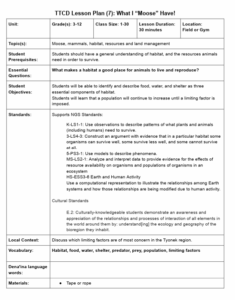
Official curriculum guide preview for What I "Moose" Have! Wildlife Habitat & Carrying Capacity
📄 7.-What-I-_Moose_-Have-.pdf

Essential Inquiries & Learning Targets

Core Essential Questions:

  • What are the four essential components of habitat that every animal must have to survive?
  • What do moose (Alces alces / dnigi) eat during harsh sub-arctic winters versus lush summers?
  • What is carrying capacity, and how do limiting factors regulate wildlife populations in Tyonek?

Student Learning Objectives:

  • Identify the 4 habitat requirements: Food, Water, Shelter, and Space.
  • Participate in the active simulation game modeling moose population fluctuations over multiple seasons.
  • Explain the Dena'ina cultural relationship to dnigi as a premier subsistence resource and teacher of land stewardship.
Self-Grading Assessment

Comprehension Mastery Quiz

Test student understanding of scientific principles, local Alaska ecology, and problem-solving scenarios from the lesson guide. Earn the What I "Moose" Have! Wildlife Habitat & Carrying Capacity Master credential!

📝 Comprehension Mastery Quiz Question 1 of 1

What are the four fundamental requirements of wildlife habitat?

Terminology & Dena’ina Context

Specialized Vocabulary Flashcards

🗂️ Interactive Vocabulary Deck Card 1 of 4

Click the card or press Space to flip. Use arrow keys to navigate.

Term Click to flip ↷

Habitat

Definition & Context Click to flip ↶

The natural environment that provides an organism with food, water, shelter, and space in suitable arrangement.

Alaska Context:

Ecology

Educator Guide

Curriculum Standards & Activity Protocol

📚 Standards Alignment (NGSS & Alaska Cultural Standards)

MS-LS2-2

Construct an explanation that predicts patterns of interactions among organisms across multiple ecosystems.

NGSS

🏔️ Local Alaskan & Tebughna Context

  • The West Cook Inlet moose herd roams the willow flats along the Chuitna and Beluga Rivers, providing meat for Tebughna community potlatches.
  • In deep snow winters, moose migrate to coastal beach fringes and south-facing bluff ridges where winds blow snow away from willow twigs.

📦 Required Materials & Classroom Setup

✓ Gym or outdoor field space✓ Boundary cones or rope lines✓ Whistle✓ Clipboard & graph paper✓ Laminated resource symbol cards

🔬 Step-by-Step Hands-on Activity Guide

  1. Step 1: Field Lines

    Mark two parallel lines 15–20 yards apart.

  2. Step 2: Assign Roles

    Split students into Moose group and Habitat group.

  3. Step 3: Select Symbols

    Each player secretly selects Food, Water, or Shelter symbol.

  4. Step 4: Simulation Run

    Run 10 seasonal rounds and record surviving population numbers.

💬 Wrap-Up Discussion & Evidence of Learning

Discussion Questions:

  • Why cannot a habitat support an infinite number of moose?
  • How do Tebughna subsistence traditions show respect to the moose?

Evidence of Learning Rubric:

  • Student accurately identifies the 4 habitat components.
  • Student graphs population boom-and-bust cycles and explains carrying capacity.
← All Youth Lessons & Resources