
Soil & Agriculture 🎯 Grades K-8 ⏱️ 60 minutes 👥 1-30 students

Seed Exploration & Plant Propagation

Hydroponics & Plant Science • Tyonek Tribal Conservation District Curriculum

Interactive Digital Curriculum

Interactive Walkthrough Slides

Step through the complete digitized curriculum deck with illustrated concepts, step-by-step procedures, teacher tips, and interactive knowledge checks.

🖥️ Interactive Walkthrough Slides
Slide 1 of 6
Download PDF
Slide 1 Botanical Inquiry

The Mystery of the Seed: Suspended Life

Nature’s Ultimate Time Capsule

A seed is a miracle of evolutionary engineering: an entire living plant in miniature, packaged with its own lunchbox and armored spacesuit, waiting for the right moment to awaken.

Some seeds can remain dormant for decades or even centuries, waiting for the precise combination of moisture, oxygen, and spring warmth before germinating.

  • 🌱
    Survival Capsule: Protects genetic instructions through freezing sub-zero Alaskan winters.
  • 🍱
    Packed Lunch: Contains enough concentrated energy to push a sprout through several inches of dark soil.
← / → Navigate slides F Fullscreen Esc Exit fullscreen
Official curriculum guide preview for Seed Exploration & Plant Propagation
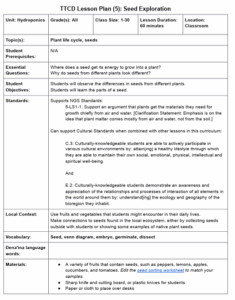
📄 5.-Seed-Exploration.pdf

Essential Inquiries & Learning Targets

Core Essential Questions:

  • What is a seed, and how does it protect and nourish a baby plant?
  • What are the three core anatomical parts of every seed?
  • How do seeds break dormancy to germinate in cold Alaska spring conditions?

Student Learning Objectives:

  • Dissect a pre-soaked large bean seed to identify the seed coat, cotyledon, and embryo.
  • Describe the environmental triggers required for germination: moisture, oxygen, and warmth.
  • Connect seed biology to crop selection for the Tyonek Grown high-tunnel greenhouse.
Self-Grading Assessment

Comprehension Mastery Quiz

Test student understanding of scientific principles, local Alaska ecology, and problem-solving scenarios from the lesson guide. Earn the Seed Exploration & Plant Propagation Master credential!

📝 Comprehension Mastery Quiz Question 1 of 1

What process begins when a dry seed absorbs water and swells to crack its coat?

Terminology & Dena’ina Context

Specialized Vocabulary Flashcards

🗂️ Interactive Vocabulary Deck Card 1 of 3

Click the card or press Space to flip. Use arrow keys to navigate.

Term Click to flip ↷

Seed Coat (Testa)

Definition & Context Click to flip ↶

The protective outer shell that shields the embryo from mechanical injury, drying, and fungi.

Alaska Context:

Botany

Educator Guide

Curriculum Standards & Activity Protocol

📚 Standards Alignment (NGSS & Alaska Cultural Standards)

4-LS1-1

Construct an argument that plants and animals have internal and external structures that function to support survival, growth, behavior, and reproduction.

NGSS

🏔️ Local Alaskan & Tebughna Context

  • Alaska Native plants like lupine and wild iris produce tough seeds that survive months of sub-zero winter temperatures before germinating.
  • In Tyonek greenhouses, starting seeds indoors in April gives crops a vital head start before the short 100-day frost-free growing season.

📦 Required Materials & Classroom Setup

✓ Soaked lima or kidney beans✓ Dry beans for comparison✓ Hand magnifiers✓ Paper towels✓ Dissecting probes or toothpicks

🔬 Step-by-Step Hands-on Activity Guide

  1. Step 1: Soak Beans

    Soak large beans in tap water for 12–24 hours prior to class.

  2. Step 2: Coat Removal

    Gently strip off seed coat and examine thickness.

  3. Step 3: Split Halves

    Split cotyledons apart without crushing the interior.

  4. Step 4: Embryo Sketch

    Locate radicle and plumule under magnifier and sketch in journal.

💬 Wrap-Up Discussion & Evidence of Learning

Discussion Questions:

  • Why would it be dangerous for an Alaskan wild seed to sprout in October?
  • What can happen to seeds planted in waterlogged soil with no oxygen?

Evidence of Learning Rubric:

  • Student accurately dissects seed and labels the seed coat, cotyledon, and embryo.
  • Student explains the 3 environmental requirements for successful germination.
← All Youth Lessons & Resources