
Native Pollinators in Sub-Arctic Ecosystems
Entomology & Sub-Arctic Pollination Ecology • Tyonek Tribal Conservation District Curriculum
Interactive Walkthrough Slides
Step through the complete digitized curriculum deck with illustrated concepts, step-by-step procedures, teacher tips, and interactive knowledge checks.
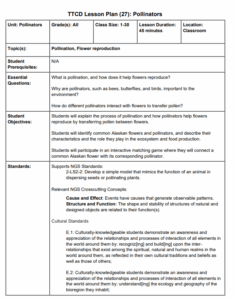
Essential Inquiries & Learning Targets
Core Essential Questions:
- How do native sub-arctic bumblebees (Bombus spp.) survive freezing spring temperatures and fly when honeybees are incapacitated by cold?
- What physiological mechanism allows queen bumblebees to warm their flight muscles to 86°F (30°C) through shivering thermogenesis?
- Why are wild bumblebees, solitary bees, and syrphid hoverflies essential for pollinating wild Alaskan berries and Tyonek garden crops?
Student Learning Objectives:
- Investigate shivering thermogenesis and dense hair insulation in sub-arctic bumblebees.
- Conduct a floral-pollinator survey in the Tyonek community gardens and surrounding tundra.
- Design and construct a native solitary bee nesting block to provide secure overwintering habitat.
Virtual Laboratory Simulator
Bumblebee Thermogenesis & Flight Simulator
Simulate flight muscle shivering thermogenesis in queen bumblebees. Balance ambient air temperature, shivering rate, and nectar caloric fuel to achieve takeoff velocity.
Field Inquiry Parameters:
Explore step-by-step variables, observation metadata, and field testing protocols directly from the official TTCD curriculum guide.
📋 Protocol Checklist
- Follow teacher safety guidance and ethical collection standards.
- Record 3 independent trials for data repeatability.
- Compare local Tyonek observations with published Alaska State Standards.
Comprehension Mastery Quiz
Test student understanding of scientific principles, local Alaska ecology, and problem-solving scenarios from the lesson guide. Earn the Sub-Arctic Pollinator Guardian credential!
How are native Alaska bumblebees (Bombus) able to fly on chilly 45°F spring mornings when honeybees cannot even leave the hive?
Specialized Vocabulary Flashcards
Click the card or press Space to flip. Use arrow keys to navigate.
Shivering Thermogenesis
The physiological process where a queen bumblebee uncouples her flight wings and contracts her massive thoracic flight muscles at high speed, generating internal body heat without flying.
Allows queen bees to raise their thorax from 40°F to 90°F on frosty spring mornings to start foraging early.
Curriculum Standards & Activity Protocol
📚 Standards Alignment (NGSS & Alaska Cultural Standards)
Construct an argument with evidence that in a particular habitat some organisms can survive well, some survive less well, and some cannot survive at all.
NGSSUse argument based on empirical evidence and scientific reasoning to support an explanation for how characteristic animal behaviors affect survival.
NGSSCulturally-knowledgeable students understand the ecology and geography of the bioregion they inhabit.
Cultural🏔️ Local Alaskan & Tebughna Context
- European honeybees cannot survive cold, rainy sub-arctic summers without artificial human heating and feeding.
- Native bumblebees (such as the Western Bumblebee and Polar Bumblebee) are co-evolved with native salmonberries, blueberries, and cloudberries.
- Tyonek high tunnel agriculture relies heavily on native pollinators buzzing through greenhouse doors to pollinate tomatoes and squash.
📦 Required Materials & Classroom Setup
🔬 Step-by-Step Hands-on Activity Guide
- Step 1: Drill Nesting Holes
Drill holes 5 to 6 inches deep into the wood block, angled slightly upward so rain cannot seep inside. Space holes 3/4 inch apart.
💡 Instructor Tip: Ensure the drill does not punch all the way through the back.
- Step 2: Smooth the Entrances
Sand down any rough splinters around hole entrances. Line holes with rolled paper straws to facilitate annual cleaning.
💡 Instructor Tip: Solitary bees will not enter holes with rough splinter blockages.
- Step 3: Mount Near the Tyonek Garden
Mount the bee block 4-6 feet off the ground facing south or southeast, sheltered from harsh Cook Inlet coastal winds.
💡 Instructor Tip: Early morning sunlight warms the holes, encouraging bees to emerge early.
💬 Wrap-Up Discussion & Evidence of Learning
Discussion Questions:
- Why are solitary native bees much gentler and less likely to sting than social yellowjackets?
- How does protecting native bumblebees directly increase berry harvests for Tebughna families?
Evidence of Learning Rubric:
- Student can explain shivering thermogenesis in sub-arctic bumblebees.
- Student constructs a functional, safe solitary bee nesting block.