
Invasive Species 🎯 Grades 3-12 ⏱️ 45 minutes 👥 1-25 students

Invasive Northern Pike: Video Inquiry & Ecological Impact

Invasive Species Biology & Management • Tyonek Tribal Conservation District Curriculum

Interactive Digital Curriculum

Interactive Walkthrough Slides

Step through the complete digitized curriculum deck with illustrated concepts, step-by-step procedures, teacher tips, and interactive knowledge checks.

🖥️ Interactive Walkthrough Slides
Slide 1 of 6
Download PDF
Slide 1 Invasive Biology

The Northern Pike Invasion in Southcentral Alaska

Esox lucius: Native Predator vs Ecological Invader

The Northern Pike (Esox lucius) is a magnificent fish—in its native waters! North and west of the Alaska Range (Yukon and Kuskokwim drainages), pike have co-existed with whitefish and salmon for millennia.

However, Southcentral Alaska and Western Cook Inlet were naturally isolated by giant glaciated mountain ranges. Here, native salmon and trout evolved with ZERO evolutionary defenses against ambush pike predators.

  • ✅
    Native Waters: Deep, fast-moving interior rivers with natural habitat balance.
  • ❌
    Invaded Waters: Shallow, weed-choked salmon nursery lakes in Cook Inlet where pike wipe out juvenile fish.
← / → Navigate slides F Fullscreen Esc Exit fullscreen
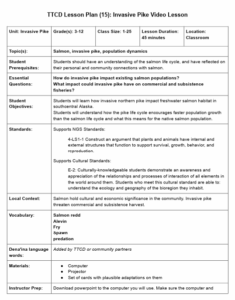
Official curriculum guide preview for Invasive Northern Pike: Video Inquiry & Ecological Impact
📄 15.-Invasive-Pike_-Video-Lesson.pdf

Essential Inquiries & Learning Targets

Core Essential Questions:

  • Why is the Northern Pike (Esox lucius / ghelguts’i) native north and west of the Alaska Range, but a devastating invasive predator in Southcentral Alaska?
  • What anatomical adaptations make pike unmatched apex ambush predators in shallow nursery lakes?
  • What legal and biosecurity measures prevent the illegal transport ('bucket biology') of live pike into Tyonek waters?

Student Learning Objectives:

  • Analyze the TTCD educational docuseries on Northern Pike, debunking common ecological myths.
  • Identify predatory morphological features: backward-curved teeth, duckbill snout, dorsal fin placement.
  • Evaluate regional suppression tools: gillnetting, fyke netting, telemetry tracking, and rotenone treatments.
Self-Grading Assessment

Comprehension Mastery Quiz

Test student understanding of scientific principles, local Alaska ecology, and problem-solving scenarios from the lesson guide. Earn the Invasive Northern Pike: Video Inquiry & Ecological Impact Master credential!

📝 Comprehension Mastery Quiz Question 1 of 1

What is the primary legal consequence of transporting live Northern Pike into new Alaska waters ('bucket biology')?

Terminology & Dena’ina Context

Specialized Vocabulary Flashcards

🗂️ Interactive Vocabulary Deck Card 1 of 3

Click the card or press Space to flip. Use arrow keys to navigate.

Term Click to flip ↷

Invasive Species

Definition & Context Click to flip ↶

A non-native organism whose introduction causes economic or environmental harm or harm to human health.

Alaska Context:

Ecology

Educator Guide

Curriculum Standards & Activity Protocol

📚 Standards Alignment (NGSS & Alaska Cultural Standards)

MS-LS2-4

Construct an argument supported by empirical evidence that changes to physical or biological components of an ecosystem affect populations.

NGSS

🏔️ Local Alaskan & Tebughna Context

  • In the 1950s, pike were illegally introduced into Bulchitna Lake in the Susitna drainage and rapidly invaded West Cook Inlet waterways (Alexander Lake, Shell Lake).
  • TTCD natural resource technicians run annual suppression netting programs to protect native coho and sockeye salmon runs.

📦 Required Materials & Classroom Setup

✓ Projector or classroom screen for TTCD docuseries videos✓ Printed video inquiry worksheets✓ Plastic fish replica models or preserved jaw specimens✓ Magnifying glasses

🔬 Step-by-Step Hands-on Activity Guide

  1. Step 1: Watch Chapter 1

    Screen Docuseries Chapter 1: Background and native range.

  2. Step 2: Watch Chapter 2

    Screen Docuseries Chapter 2: Debunking common pike misconceptions.

  3. Step 3: Jaw Analysis

    Examine diagram of backward-facing teeth and ambush morphology.

  4. Step 4: Debrief

    Complete worksheet questions comparing native vs invaded food webs.

💬 Wrap-Up Discussion & Evidence of Learning

Discussion Questions:

  • Why is an apex predator beneficial in its native home but destructive in an introduced ecosystem?
  • How does TTCD Youth Pike Camp combine conservation with community nutrition?

Evidence of Learning Rubric:

  • Student explains why Southcentral Alaska salmon have no defenses against pike.
  • Student identifies the anatomical adaptations of pike that make them apex ambush hunters.
← All Youth Lessons & Resources