
Soil & Agriculture 🎯 Grades K-8 ⏱️ 45 minutes 👥 1-30 students

What is Soil? The 4 Core Fractions

Soil Science & Watershed Dynamics • Tyonek Tribal Conservation District Curriculum

Interactive Digital Curriculum

Interactive Walkthrough Slides

Step through the complete digitized curriculum deck with illustrated concepts, step-by-step procedures, teacher tips, and interactive knowledge checks.

🖥️ Interactive Walkthrough Slides
Slide 1 of 6
Download PDF
Slide 1 Inquiry & Cultural Context

What is Soil? The Living Skin of the Earth

Connecting the Ground Beneath Us to the Tyonek Watershed

Soil is far more than dirt—it is a living, breathing ecosystem that anchors plants, stores water, cycles nutrients, and provides the foundation for all life on land.

In Dena’ina Athabascan, the earth and soil is called łach’. For generations, Tebughna families have recognized that healthy soil produces abundant berry patches, towering spruce forests, and clear salmon streams.

  • 🌍
    Living Skin: A single teaspoon of healthy forest soil contains more living microorganisms than there are humans on Earth!
  • 💧
    Watershed Sponge: Soil absorbs and filters torrential coastal rains, slowly releasing clean water into salmon rivers.
💬 Dena’ina Language Connection

The word łach’ signifies reverence for the earth. When we steward the soil, we protect our food and water.

📋 Teacher Preparation & Field Guidance Notes ▾

Begin with a small cup of forest soil. Have students touch, smell, and observe it with hand lenses.
← / → Navigate slides F Fullscreen Esc Exit fullscreen
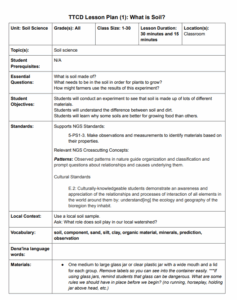
Official curriculum guide preview for What is Soil? The 4 Core Fractions
📄 1.-What-is-soil.pdf

Essential Inquiries & Learning Targets

Core Essential Questions:

  • What is soil, and how is it distinct from lifeless dirt or crushed rock?
  • What are the four primary volumetric components of fertile soil?
  • How does healthy forest soil function as a natural water reservoir in the Tyonek watershed?
  • How do Tebughna farmers and greenhouse managers build living soil organic matter?

Student Learning Objectives:

  • Identify the 4 components of soil: minerals (45%), organic matter (5%), air (25%), and water (25%).
  • Conduct a shake-jar sedimentation experiment to measure settling rates of sand, silt, clay, and humus.
  • Connect the Dena’ina value of łach’ (earth/soil) to watershed health and food sovereignty.
Self-Grading Assessment

Comprehension Mastery Quiz

Test student understanding of scientific principles, local Alaska ecology, and problem-solving scenarios from the lesson guide. Earn the What is Soil? The 4 Core Fractions Master credential!

📝 Comprehension Mastery Quiz Question 1 of 3

What is the Dena’ina word for soil or earth?

Terminology & Dena’ina Context

Specialized Vocabulary Flashcards

🗂️ Interactive Vocabulary Deck Card 1 of 4

Click the card or press Space to flip. Use arrow keys to navigate.

Term Click to flip ↷

Soil

Definition & Context Click to flip ↶

A dynamic natural body of mineral particles, organic matter, water, air, and billions of living microorganisms.

Alaska Context:

Earth Science

Educator Guide

Curriculum Standards & Activity Protocol

📚 Standards Alignment (NGSS & Alaska Cultural Standards)

MS-ESS2-1

Develop a model to describe the cycling of Earth materials and the flow of energy.

NGSS
AK-Cult-B1

Students will recognize the interrelationship between the land, resources, and indigenous human communities.

Cultural

🏔️ Local Alaskan & Tebughna Context

  • Soils in West Cook Inlet developed from glacial outwash, moraine gravels, and volcanic ash deposits from Mount Spurr and Mount Redoubt.
  • Tyonek Grown greenhouses utilize local salmon compost and leaf mulch to improve sandy sub-arctic topsoils.

📦 Required Materials & Classroom Setup

✓ Glass mason jars with lids✓ Soil samples from garden or trail✓ Tap water✓ Coffee stirrers / sticks✓ Rulers✓ Colored pencils

🔬 Step-by-Step Hands-on Activity Guide

  1. Step 1: Sample Collection

    Scoop 1 cup of local soil from the surface 0–4 inches of topsoil.

  2. Step 2: Jar Filling

    Place soil into jar, fill 3/4 with tap water, and observe bubbles.

  3. Step 3: Vigorous Shaking

    Secure lid and shake vigorously for 60 seconds to suspend all particles.

  4. Step 4: Settling Observation

    Place on shelf and record layer heights at 1 min, 2 hours, and 24 hours.

💬 Wrap-Up Discussion & Evidence of Learning

Discussion Questions:

  • Why is soil considered a non-renewable resource on human timescales?
  • How does the Tyonek Grown community garden use fish waste and compost to improve sandy soils?

Evidence of Learning Rubric:

  • Student accurately identifies the 4 fractions of soil and sketches a 3-layer sediment jar with correct labels.
  • Student articulates the role of soil as a natural water filtration system in the watershed.
← All Youth Lessons & Resources