
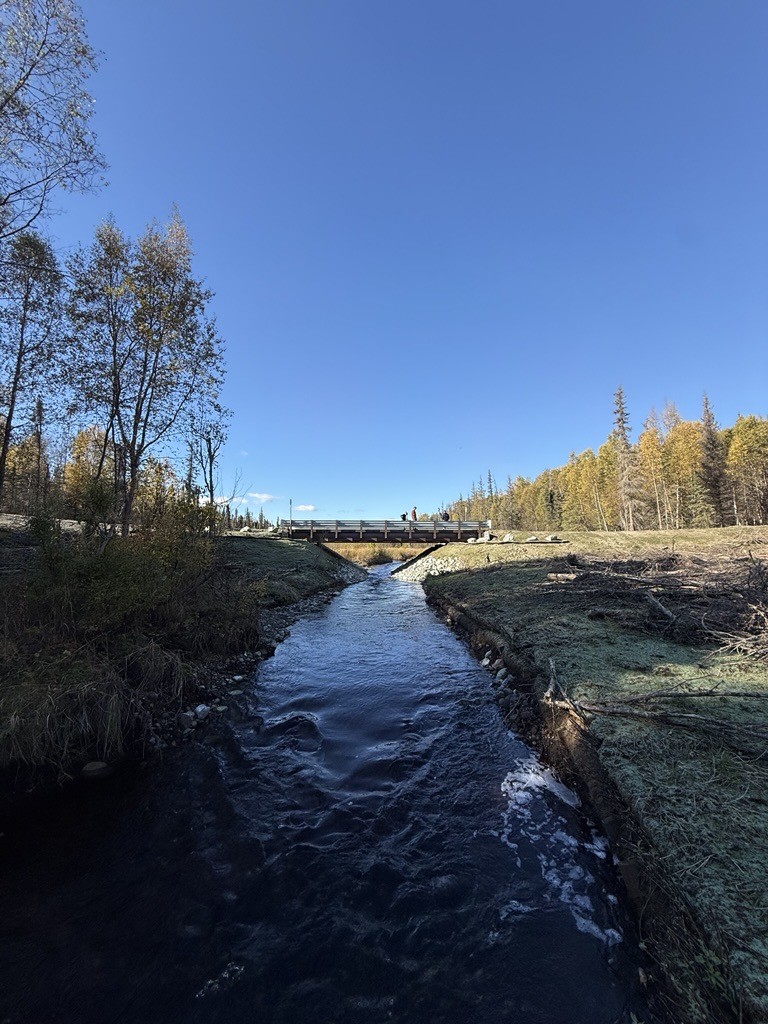
Salmon are an essential cultural, nutritional, and economic resource for District residents. Since 2012, TTCD has worked to improve watershed connectivity by removing fish-passage barriers, monitoring salmon populations and watershed conditions, and addressing invasive species that threaten native fish habitat.
Fish Passage & Culvert Replacements
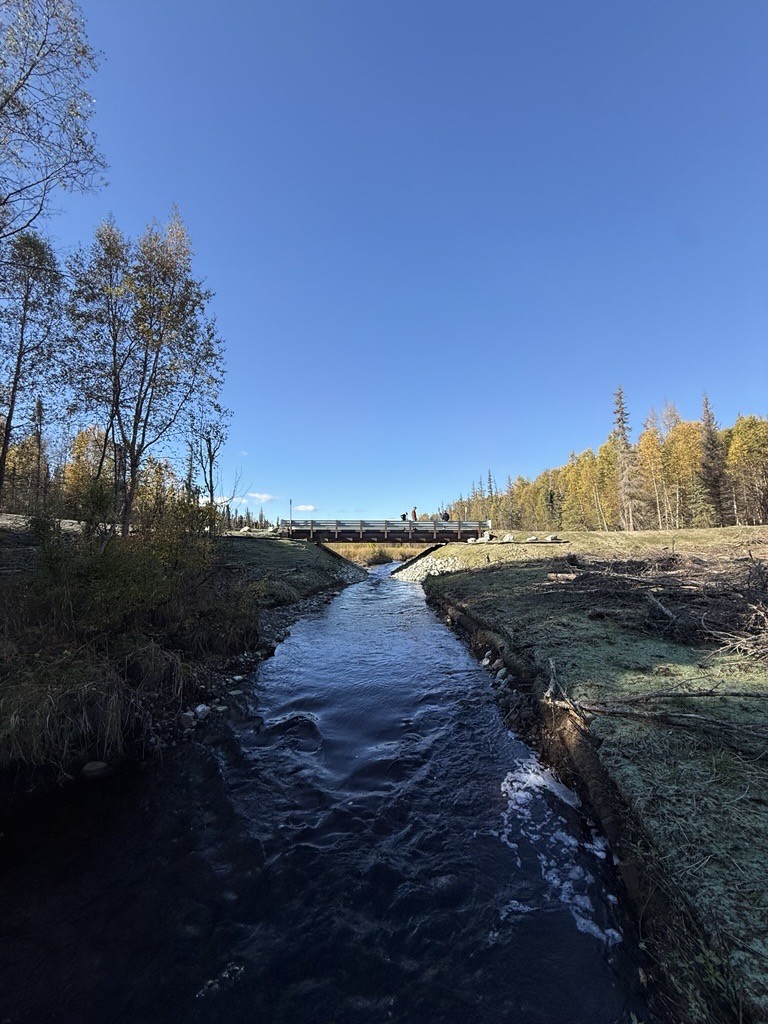
Remote roads built across Western Cook Inlet created stream crossings that can restrict or block fish movement when culverts are undersized, perched, damaged, or poorly aligned. TTCD works with landowners and agency partners to replace priority barriers and reconnect upstream habitat.
- 15 successful culvert replacements: documented by TTCD's 2025 Annual Report.
- 61.1 miles of stream habitat restored: reconnecting spawning and rearing habitat across Western Cook Inlet.
- 590 acres of lake ecosystems restored: expanding access to connected aquatic habitat.
Data note: TTCD's live Salmon Habitat page still displays 2024 totals of 13 culverts, 60.2 stream miles, and 500+ lake acres. This rebuild uses the newer 2025 Annual Report for headline outcome totals.
Current Restoration Priorities
TTCD continues to evaluate and improve priority stream crossings identified through field surveys, engineering work, and long-term watershed planning. Because the current WordPress page still describes 2025 projects in future tense, this rebuild does not present those older schedules as current project status. Project-specific timelines should be updated as TTCD publishes confirmed milestones.
Watershed Monitoring & AKTEMP
TTCD established five water-temperature and water-quality monitoring sites in 2015 and later added 16 more across the District, for 21 documented monitoring sites on the current program page. Public temperature data are available through the AKTEMP database.
Salmon Population Surveys & Anadromous Waters Catalog
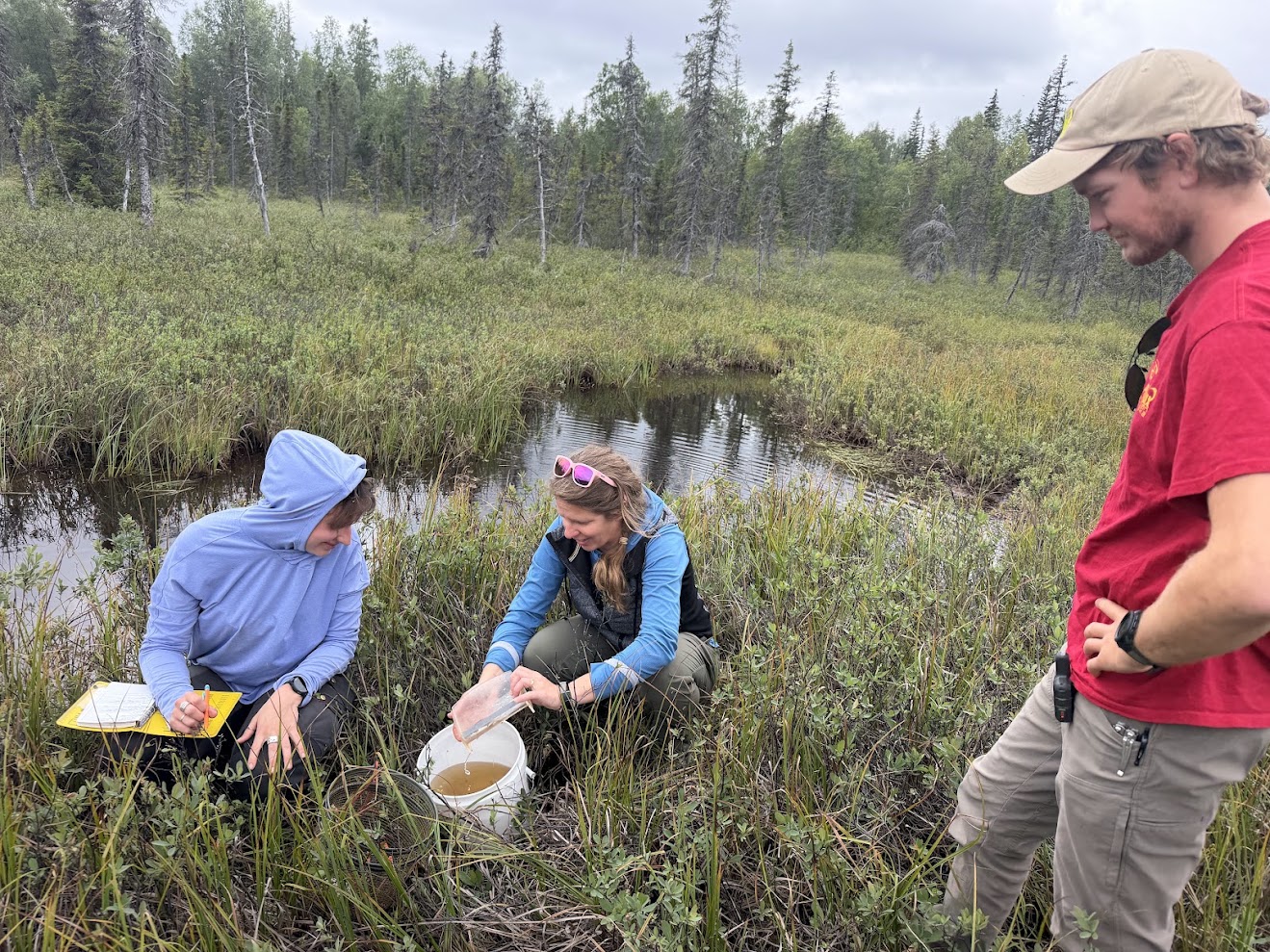
TTCD monitors salmon populations through juvenile salmonid trapping, Coho spawning-ground surveys, redd counts, and other field methods. The live program page documents long-term work on Threemile Creek, Roberts Creek, and Chuitbuna Creek.
In 2024, TTCD reported adding 18 nominations to the Alaska Department of Fish & Game Anadromous Waters Catalog (AWC), increasing formal documentation and habitat protection for salmon-bearing waters.
Support our work
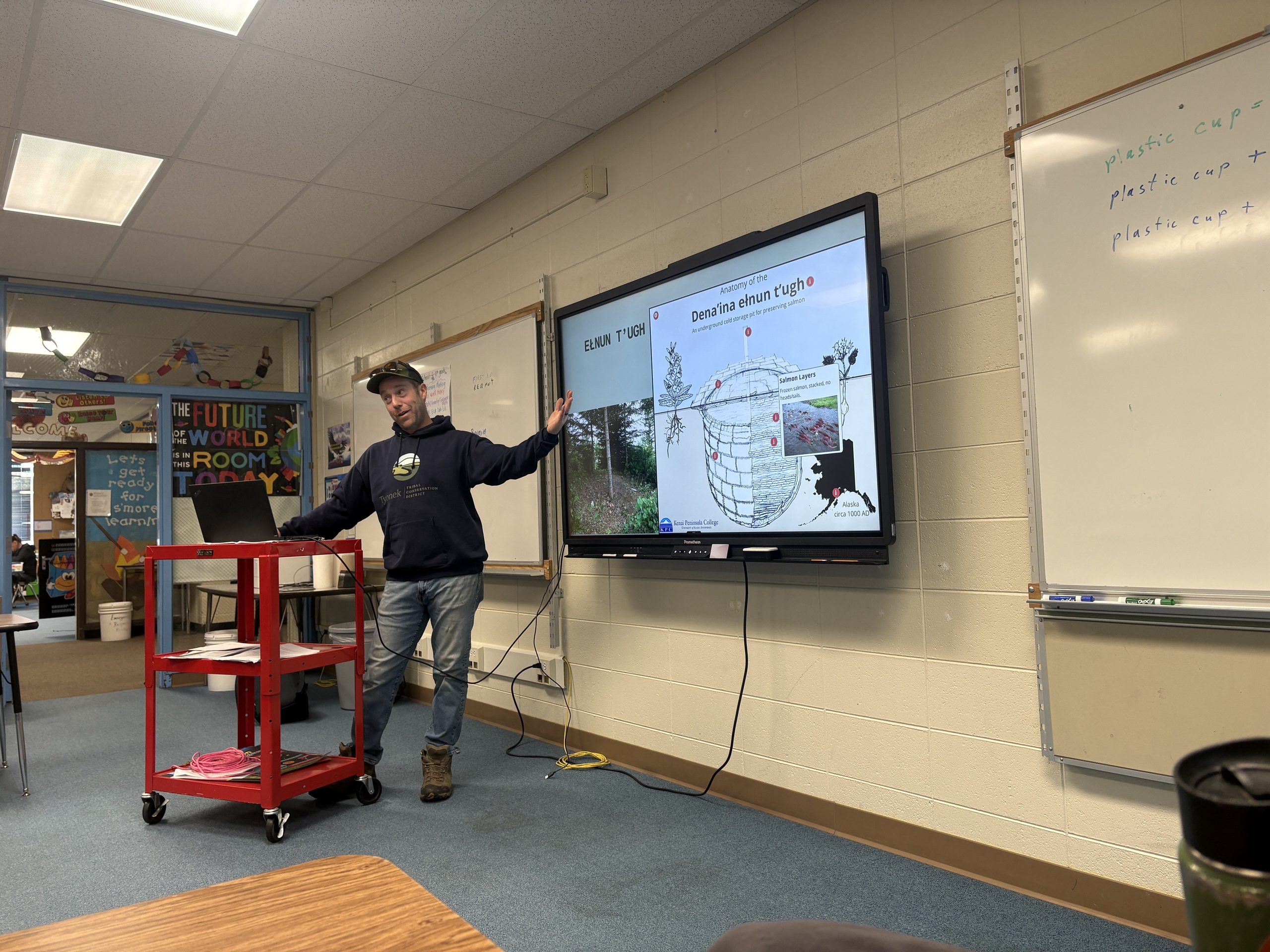
Donations support salmon habitat, food security, youth education, and District landowners.