
Ecosystems & Wildlife 🎯 Grades 4-9 ⏱️ 1 hour 👥 1-30 students

Biological Antifreeze in Plants & Animals

Sub-Arctic Adaptations & Cell Physiology • Tyonek Tribal Conservation District Curriculum

Interactive Digital Curriculum

Interactive Walkthrough Slides

Step through the complete digitized curriculum deck with illustrated concepts, step-by-step procedures, teacher tips, and interactive knowledge checks.

🖥️ Interactive Walkthrough Slides
Slide 1 of 6
Download PDF
Slide 1 Introduction & Concepts

Sub-Zero Survival: Freeze Tolerance vs Freeze Avoidance

How Organisms Survive -40°F in Western Cook Inlet

When water freezes, it expands into jagged crystalline lattices that pierce and shred cellular membranes, causing immediate cell death.

To survive harsh Alaskan winters, sub-arctic organisms evolved two distinct evolutionary strategies: freeze tolerance (safely allowing ice to freeze outside cells) and freeze avoidance (supercooling liquids to stay liquid far below freezing).

  • 🧊
    Freeze Tolerance: Wood frogs and willow gall insects freeze solid while cryoprotectants shield cell interiors.
  • 🧪
    Freeze Avoidance: Spiders, beetles, and evergreen needles depress freezing points to remain liquid.
← / → Navigate slides F Fullscreen Esc Exit fullscreen
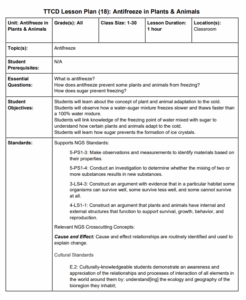
Official curriculum guide preview for Biological Antifreeze in Plants & Animals
📄 Antifreeze-in-Plants-Animals.pdf

Essential Inquiries & Learning Targets

Core Essential Questions:

  • How do sub-arctic insects, amphibians, and evergreen trees survive temperatures below -40°F without freezing solid?
  • What happens to animal cells when water inside them turns to sharp ice crystals?
  • How do biological solutes like glycerol and antifreeze proteins depress the freezing point of intracellular fluids?

Student Learning Objectives:

  • Differentiate between freeze avoidance (supercooling) and freeze tolerance in northern wildlife.
  • Demonstrate freezing point depression experimentally using water, salt, sugar, and glycerol solutions.
  • Investigate the extreme physiological adaptations of the Alaskan red flat bark beetle (Cucujus clavipes) and Upis beetle (Upis ceramboides).
Interactive Experiment

Virtual Laboratory Simulator

🔬 Hands-on Virtual STEM Lab Cryobiology Specialist

Solute Freezing-Point Depression Lab

Test how different concentrations of solutes (pure water, table sugar, salt, and insect glycerol) depress the freezing point and prevent ice crystal expansion that ruptures cell walls.

Select Biological Fluid / Solution:

Freezing Point: 0.0°C
Physical State: Frozen Solid
Cell Membrane Status: Ruptured & Burst
Result: Pure water freezes at 0°C. Long needle-like hexagonal ice crystals expand by 9%, piercing the cell membrane and causing cellular collapse upon thawing.
Self-Grading Assessment

Comprehension Mastery Quiz

Test student understanding of scientific principles, local Alaska ecology, and problem-solving scenarios from the lesson guide. Earn the Cryobiology Specialist credential!

📝 Comprehension Mastery Quiz Question 1 of 4

Why does pure water inside living cells cause lethal damage when it freezes into ice?

Terminology & Dena’ina Context

Specialized Vocabulary Flashcards

🗂️ Interactive Vocabulary Deck Card 1 of 4

Click the card or press Space to flip. Use arrow keys to navigate.

Term Click to flip ↷

Freezing Point Depression

Definition & Context Click to flip ↶

The colligative phenomenon where adding solute molecules (salt, sugar, glycerol) to a solvent lowers the temperature at which the liquid turns into a solid.

Alaska Context:

Pure water freezes at 32°F (0°C), but intracellular fluid saturated with glycerol remains liquid down to -50°F or lower.

Educator Guide

Curriculum Standards & Activity Protocol

📚 Standards Alignment (NGSS & Alaska Cultural Standards)

5-PS1-3

Make observations and measurements to identify materials based on their properties.

NGSS
MS-LS1-4

Use argument based on empirical evidence and scientific reasoning to support an explanation for how characteristic animal behaviors affect survival.

NGSS
Cultural Standard E.2

Culturally-knowledgeable students understand the ecology and geography of the bioregion they inhabit.

Cultural

🏔️ Local Alaskan & Tebughna Context

  • West Cook Inlet experiences winter temperatures reaching -20°F to -40°F with biting coastal winds.
  • Tebughna elders observe wood-boring beetle larvae surviving beneath frozen spruce bark all winter without perishing.
  • Wood frogs (Lithobates sylvaticus) across the Tyonek watershed freeze their heart and breathing for up to 7 months, reviving when spring sun melts the muskeg.

📦 Required Materials & Classroom Setup

✓ 4 clear plastic cups or beakers✓ Tap water✓ Table salt (NaCl)✓ Granulated sugar✓ Vegetable glycerin (glycerol) or corn syrup✓ Laboratory thermometer (-20°C to 50°C)✓ Freezer or cooler filled with dry ice / rock salt ice bath

🔬 Step-by-Step Hands-on Activity Guide

  1. Step 1: Label the Solution Cups

    Label Cup A (Pure Water), Cup B (10% Sugar), Cup C (20% Sugar/Glycerol), Cup D (Saturated Salt).

    💡 Instructor Tip: Measure equal volumes (100 mL) in all cups.

  2. Step 2: Measure Initial Temperatures

    Record baseline liquid temperature in all cups at room temperature (~20°C).

    💡 Instructor Tip: Rinse thermometer between solutions.

  3. Step 3: Place in Freezer Bath

    Place all 4 cups simultaneously into the freezing chamber. Check every 15 minutes.

    💡 Instructor Tip: Observe which cup forms surface ice first.

  4. Step 4: Observe Slush vs Solid Phase

    Pure water freezes solid into rigid ice. The sugar and glycerol solutions stay thick, syrupy liquids long after 0°C, proving freezing point depression.

    💡 Instructor Tip: Note how glycerol prevents large, jagged crystal structures.

💬 Wrap-Up Discussion & Evidence of Learning

Discussion Questions:

  • Why do road crews sprinkle salt on icy Alaska roads in the winter?
  • Why is freeze tolerance safer when ice forms outside of cells rather than inside cells?
  • How does the wood frog adaptation inform human medical organ preservation research?

Evidence of Learning Rubric:

  • Student can graph freezing point vs solute concentration.
  • Student accurately defines cryoprotectant and explains why glycerol protects insect cell walls.
← All Youth Lessons & Resources