
Food & Ethnobotany 🎯 Grades 5-12 ⏱️ 20 minutes 👥 5-30 students

What is a Food System? Local vs Global Supply Chains

Food Systems & Food Sovereignty • Tyonek Tribal Conservation District Curriculum

Interactive Digital Curriculum

Interactive Walkthrough Slides

Step through the complete digitized curriculum deck with illustrated concepts, step-by-step procedures, teacher tips, and interactive knowledge checks.

🖥️ Interactive Walkthrough Slides
Slide 1 of 6
Download PDF
Slide 1 Systemic Thinking

Mapping the Food System

The Web of Connections That Feeds the World

When you eat an apple or a piece of smoked king salmon, where did it come from? Who grew or caught it? How did it travel to your kitchen?

A food system encompasses every single activity, person, road, boat, and resource involved in getting food from the earth to our plates and back into the soil as compost.

  • 🔄
    5 Stages: 1. Production → 2. Processing → 3. Distribution → 4. Consumption → 5. Waste / Recovery
← / → Navigate slides F Fullscreen Esc Exit fullscreen
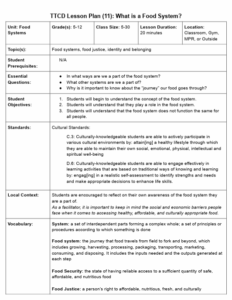
Official curriculum guide preview for What is a Food System? Local vs Global Supply Chains
📄 11.-What-is-a-food-system.pdf

Essential Inquiries & Learning Targets

Core Essential Questions:

  • What is a food system, and what interconnected steps bring food from the earth to our plates?
  • How do global industrial food supply chains differ from traditional Dena'ina subsistence harvesting?
  • Why is rural Alaska particularly vulnerable to supply chain disruptions, and how does local production build resilience?

Student Learning Objectives:

  • Map the 5 stages of a food system: Production, Processing, Distribution, Consumption, and Waste Management.
  • Calculate food miles and carbon footprints of imported supermarket food vs local Tyonek salmon and vegetables.
  • Define food sovereignty from an Alaska Native perspective.
Self-Grading Assessment

Comprehension Mastery Quiz

Test student understanding of scientific principles, local Alaska ecology, and problem-solving scenarios from the lesson guide. Earn the What is a Food System? Local vs Global Supply Chains Master credential!

📝 Comprehension Mastery Quiz Question 1 of 1

What distinguishes food sovereignty from basic food security?

Terminology & Dena’ina Context

Specialized Vocabulary Flashcards

🗂️ Interactive Vocabulary Deck Card 1 of 3

Click the card or press Space to flip. Use arrow keys to navigate.

Term Click to flip ↷

Food System

Definition & Context Click to flip ↶

The complete network of infrastructure, processes, and relationships involved in feeding a population: growing, harvesting, processing, packaging, transporting, marketing, consuming, and disposing.

Alaska Context:

Social Science

Educator Guide

Curriculum Standards & Activity Protocol

📚 Standards Alignment (NGSS & Alaska Cultural Standards)

MS-ESS3-4

Construct an argument supported by evidence for how increases in human population and per-capita consumption of natural resources impact Earth's systems.

NGSS

🏔️ Local Alaskan & Tebughna Context

  • Tyonek has no road connection to the Alaska highway grid; all commercial groceries arrive via small cargo flights or seasonal marine barges.
  • Traditional subsistence harvesting (salmon, moose, berries, waterfowl) supplies up to 70% of wild protein in Tebughna households.

📦 Required Materials & Classroom Setup

✓ World map poster✓ Food packaging labels from home or cafeteria✓ Colored markers & string✓ Sticky notes

🔬 Step-by-Step Hands-on Activity Guide

  1. Step 1: Inspect Labels

    Examine food packages to find countries and states of origin.

  2. Step 2: Plot on Map

    Use pins and colored yarn to trace transport routes from origin to Tyonek.

  3. Step 3: Calculate Miles

    Sum up total food miles traveled for a single meal.

  4. Step 4: Local Alternative

    Identify a local subsistence or greenhouse alternative for each item.

💬 Wrap-Up Discussion & Evidence of Learning

Discussion Questions:

  • Why is relying 100% on imported food risky for coastal Alaska villages?
  • How does catching wild salmon protect both health and community traditions?

Evidence of Learning Rubric:

  • Student accurately diagrams the 5 stages of a food system.
  • Student articulates the benefits of tribal food sovereignty over industrial food imports.
← All Youth Lessons & Resources