
Soil & Agriculture 🎯 Grades K-8 ⏱️ 45 minutes 👥 1-30 students

What is Hydroponics? Soilless Food Cultivation

Hydroponics & Controlled Environment Agriculture • Tyonek Tribal Conservation District Curriculum

Interactive Digital Curriculum

Interactive Walkthrough Slides

Step through the complete digitized curriculum deck with illustrated concepts, step-by-step procedures, teacher tips, and interactive knowledge checks.

🖥️ Interactive Walkthrough Slides
Slide 1 of 6
Download PDF
Slide 1 Modern Agricultural Science

Growing Without Dirt: The Science of Hydroponics

Controlled Environment Agriculture for Northern Climates

Can you grow a crisp head of lettuce without a single grain of dirt? Absolutely!

Plants do not inherently need soil—they need what soil holds: water, dissolved mineral ions, oxygen for root respiration, and physical support. In hydroponics, these essentials are delivered directly to the root zone.

  • 🚀
    Rapid Growth: Crops grow 30–50% faster because roots don't have to search through dense dirt for food.
  • 💧
    Water Efficient: Uses up to 90% less water than outdoor field farming by recycling reservoir water.
← / → Navigate slides F Fullscreen Esc Exit fullscreen
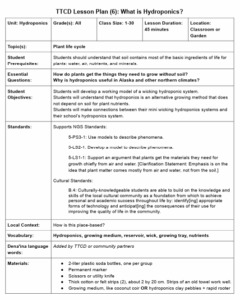
Official curriculum guide preview for What is Hydroponics? Soilless Food Cultivation
📄 6.-What-is-Hydroponics.pdf

Essential Inquiries & Learning Targets

Core Essential Questions:

  • How can plants grow, flower, and produce nutritious food without any soil?
  • What are the core environmental inputs roots require: water, dissolved mineral ions, oxygen, and support?
  • How does controlled environment hydroponics strengthen food sovereignty during dark, sub-zero Alaska winters?

Student Learning Objectives:

  • Compare soil agriculture with hydroponics in water conservation, growth rate, and pest management.
  • Construct a recycled 2-liter bottle passive wick or Deep Water Culture (DWC) desktop hydroponic unit.
  • Monitor pH and electrical conductivity (EC) of a balanced hydroponic nutrient solution.
Self-Grading Assessment

Comprehension Mastery Quiz

Test student understanding of scientific principles, local Alaska ecology, and problem-solving scenarios from the lesson guide. Earn the What is Hydroponics? Soilless Food Cultivation Master credential!

📝 Comprehension Mastery Quiz Question 1 of 1

What is the optimal pH range for most hydroponically grown crops?

Terminology & Dena’ina Context

Specialized Vocabulary Flashcards

🗂️ Interactive Vocabulary Deck Card 1 of 3

Click the card or press Space to flip. Use arrow keys to navigate.

Term Click to flip ↷

Hydroponics

Definition & Context Click to flip ↶

The cultivation of plants in water containing dissolved inorganic nutrients without soil.

Alaska Context:

Horticulture

Educator Guide

Curriculum Standards & Activity Protocol

📚 Standards Alignment (NGSS & Alaska Cultural Standards)

MS-LS1-5

Construct a scientific explanation based on evidence for how environmental and genetic factors influence the growth of organisms.

NGSS

🏔️ Local Alaskan & Tebughna Context

  • Remote Alaska communities face fresh produce supply disruptions when winter storms delay planes and barges.
  • Tyonek greenhouse and classroom hydroponic systems grow crisp lettuce, basil, and strawberries year-round using energy-efficient LED grow lights.

📦 Required Materials & Classroom Setup

✓ Clean 2-liter soda bottles✓ Utility shears✓ Cotton or nylon wicking rope✓ Perlite or expanded clay pebbles✓ Lettuce seedlings✓ Hydroponic liquid fertilizer✓ pH test strips

🔬 Step-by-Step Hands-on Activity Guide

  1. Step 1: Cut Bottle

    Cut bottle in half and invert top neck into base.

  2. Step 2: Thread Wick

    Thread cotton wick through neck into reservoir base.

  3. Step 3: Add Medium

    Fill top funnel with expanded clay or perlite.

  4. Step 4: Fill & Plant

    Add nutrient solution to base and transplant lettuce seedling.

💬 Wrap-Up Discussion & Evidence of Learning

Discussion Questions:

  • Why is hydroponics an important technology for remote villages during Alaska winters?
  • What happens to plant roots if you forget to aerate the water?

Evidence of Learning Rubric:

  • Student successfully constructs functional wicking hydroponic planter.
  • Student explains how roots take up dissolved inorganic ions without soil.
← All Youth Lessons & Resources