
Food Systems & Ethnobotany 🎯 Grades 4-12 ⏱️ 1 hour 30 minutes 👥 1-30 students

Dena’ina Ethnobotany & Traditional Plant Knowledge

Indigenous Science & Traditional Ecological Knowledge (TEK) • Tyonek Tribal Conservation District Curriculum

Interactive Digital Curriculum

Interactive Walkthrough Slides

Step through the complete digitized curriculum deck with illustrated concepts, step-by-step procedures, teacher tips, and interactive knowledge checks.

🖥️ Interactive Walkthrough Slides
Slide 1 of 6
Download PDF
Slide 1 Cultural Foundations

Tebughna Ethnobotany: Plants as Living Relatives

Traditional Ecological Knowledge of Western Cook Inlet Flora

Ethnobotany is the study of how human cultures interact with and utilize native plants for food, medicine, shelter, tools, and spiritual ceremonies.

For thousands of years, Tebughna people thrived in the Tyonek region because of an intimate understanding of the life cycles and medicinal potencies of every forest plant.

  • 🌿
    Living Pharmacy: Native plants provided remedies for colds, infections, cuts, and joint pain.
  • 🥗
    Nutritional Bounty: Wild greens and roots provided vital vitamins and starches alongside fish and game.
← / → Navigate slides F Fullscreen Esc Exit fullscreen
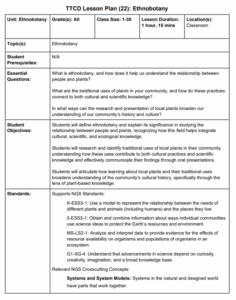
Official curriculum guide preview for Dena’ina Ethnobotany & Traditional Plant Knowledge
📄 Ethnobotany.pdf

Essential Inquiries & Learning Targets

Core Essential Questions:

  • How have the Tebughna Dena’ina utilized sub-arctic flora for food, medicine, tools, and spiritual wellness for centuries?
  • What core traditional harvesting ethics guide respectful plant gathering on ancestral lands?
  • How do modern botanical and pharmaceutical sciences validate traditional medicinal uses of plants like wormwood, spruce pitch, and Labrador tea?

Student Learning Objectives:

  • Identify 8 key traditional plants utilized by the Tebughna Dena’ina and their seasonal harvesting calendars.
  • Practice honorable harvesting ethics: never take the first or last plant, take only what is needed, and leave root systems intact.
  • Connect traditional preparations (teas, salves, smudges, baskets) to active botanical compounds.
Interactive Experiment

Virtual Laboratory Simulator

🔬 Hands-on Virtual STEM Lab Dena’ina Botanical Scholar

Traditional Plant Use & Seasonal Matcher

Match traditional Alaskan plants (wormwood, Labrador tea, fireweed, spruce pitch, birch bark) to their Tebughna names, healing preparations, and ethical harvest seasons.

Field Inquiry Parameters:

Explore step-by-step variables, observation metadata, and field testing protocols directly from the official TTCD curriculum guide.

Active Protocol: Traditional Plant Use & Seasonal Matcher
Status: Standards Verified ✓
📋 Protocol Checklist
  • Follow teacher safety guidance and ethical collection standards.
  • Record 3 independent trials for data repeatability.
  • Compare local Tyonek observations with published Alaska State Standards.
Self-Grading Assessment

Comprehension Mastery Quiz

Test student understanding of scientific principles, local Alaska ecology, and problem-solving scenarios from the lesson guide. Earn the Dena’ina Botanical Scholar credential!

📝 Comprehension Mastery Quiz Question 1 of 2

Under Dena’ina and indigenous honorable harvesting ethics, what should you do when you spot the very first medicinal plant in a forest clearing?

Terminology & Dena’ina Context

Specialized Vocabulary Flashcards

🗂️ Interactive Vocabulary Deck Card 1 of 3

Click the card or press Space to flip. Use arrow keys to navigate.

Term Click to flip ↷

Ethnobotany

Definition & Context Click to flip ↶

The scientific study of the relationships that exist between peoples and plants, including traditional indigenous culinary, medicinal, and technological uses.

Alaska Context:

Combines anthropological linguistic study with botanical taxonomy and pharmacology.

Educator Guide

Curriculum Standards & Activity Protocol

📚 Standards Alignment (NGSS & Alaska Cultural Standards)

5-ESS3-1

Obtain and combine information about ways individual communities use science ideas to protect the Earth’s resources and environment.

NGSS
Cultural Standard E.1

Culturally-knowledgeable students build upon the interrelationships that exist among spiritual, natural, and human realms.

Cultural
Cultural Standard E.2

Culturally-knowledgeable students understand the ecology and geography of the bioregion they inhabit.

Cultural

🏔️ Local Alaskan & Tebughna Context

  • Tebughna territory encompasses diverse ecosystems: coastal mudflats, muskeg bogs, boreal forests, and sub-alpine tundra.
  • Elders pass down oral plant knowledge: wild wormwood (ts'elveni) for colds and aches, spruce pitch for cuts and sealants, and fireweed for tea and spring greens.
  • Always emphasize respect and reciprocity with the natural world.

📦 Required Materials & Classroom Setup

✓ Field plant press or heavy phone books lined with cardboard✓ Clean cotton gathering bags or woven baskets✓ Magnifying loupe✓ Plant identification cards with Dena’ina and English names

🔬 Step-by-Step Hands-on Activity Guide

  1. Step 1: Review Harvesting Ethics with Elders

    Before touching any plants, discuss the 3 sacred rules: 1) Ask permission and show gratitude, 2) Never take the first or last plant, 3) Take no more than 1/3 of the patch.

    💡 Instructor Tip: Always harvest leaves gently without yanking underground root crowns.

  2. Step 2: Botanical Identification in Field

    Locate specimen plants (Fireweed, Labrador Tea, Wormwood). Examine leaf veins, fragrance, flower structure, and habitat.

    💡 Instructor Tip: Crush a tiny leaf corner to smell characteristic herbal aromas.

  3. Step 3: Preserve Botanical Specimens

    Place gathered samples between blotter paper in the plant press. Tighten straps to flatten and dehydrate specimens for a permanent herbarium reference.

    💡 Instructor Tip: Change blotter paper every 2 days to prevent sub-arctic mold.

💬 Wrap-Up Discussion & Evidence of Learning

Discussion Questions:

  • Why is Traditional Ecological Knowledge (TEK) considered an empirical science built on centuries of observation?
  • How does passing traditional plant knowledge to Tebughna youth strengthen cultural identity and food sovereignty?

Evidence of Learning Rubric:

  • Student recites the three rules of honorable harvesting.
  • Student correctly identifies 5 local plants by their ecological niche and cultural use.
← All Youth Lessons & Resources