
Food & Ethnobotany 🎯 Grades K-12 ⏱️ 60 minutes 👥 1-50 students

Berry Harvest & Traditional Ethnobotanical Stewardship

Ethnobotany & Sub-Arctic Foraging • Tyonek Tribal Conservation District Curriculum

Interactive Digital Curriculum

Interactive Walkthrough Slides

Step through the complete digitized curriculum deck with illustrated concepts, step-by-step procedures, teacher tips, and interactive knowledge checks.

🖥️ Interactive Walkthrough Slides
Slide 1 of 6
Download PDF
Slide 1 Ethnobotanical Traditions

The Sweet Bounty of Western Cook Inlet

Wild Berries (gega) in Tebughna Life

As August arrives in Tyonek, coastal muskegs and forest edges light up with rich hues of ruby, gold, and sapphire.

Wild berries (gega) have sustained Tebughna families for thousands of years, providing vital Vitamin C, polyphenols, and sweet winter food to balance rich subsistence salmon and moose.

  • 🧡
    Salmonberry (Cloudberry): Soft golden-amber berry prized for traditional agutak (Eskimo ice cream).
  • ❤️
    Lowbush Cranberry: Crisp tart red berry packed with natural preservatives that keep for months in cool cellars.
  • 💙
    Bog Blueberry: Deep blue-violet antioxidant powerhouse sweetening autumn trail trips.
  • 🖤
    Crowberry (Blackberry): Shiny black berry high in water, eaten fresh or mixed with cranberries.
← / → Navigate slides F Fullscreen Esc Exit fullscreen
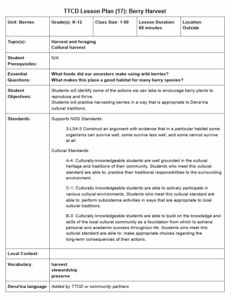
Official curriculum guide preview for Berry Harvest & Traditional Ethnobotanical Stewardship
📄 17.-Berry-Harvest-Lesson.pdf

Essential Inquiries & Learning Targets

Core Essential Questions:

  • What edible wild berry species thrive across the coastal bogs, spruce forests, and alpine tundra of Tyonek?
  • What traditional cultural values and protocols govern respectful Tebughna berry gathering (gega)?
  • How are wild berries processed, dehydrated into fruit leather, and preserved for winter nutrition?

Student Learning Objectives:

  • Identify 4 major native berry species: Salmonberry, Lowbush Cranberry, Oval-leaf Blueberry, and Crowberry.
  • Construct a hands-free recycled harvest bucket from clean yogurt containers and braided yarn.
  • Explain the nutritional and cultural importance of wild berries in traditional Dena'ina food systems.
Self-Grading Assessment

Comprehension Mastery Quiz

Test student understanding of scientific principles, local Alaska ecology, and problem-solving scenarios from the lesson guide. Earn the Berry Harvest & Traditional Ethnobotanical Stewardship Master credential!

📝 Comprehension Mastery Quiz Question 1 of 1

What is the Dena’ina cultural protocol regarding the very first bowl of wild berries picked each season?

Terminology & Dena’ina Context

Specialized Vocabulary Flashcards

🗂️ Interactive Vocabulary Deck Card 1 of 3

Click the card or press Space to flip. Use arrow keys to navigate.

Term Click to flip ↷

gega

/geh-GAH/

Definition & Context Click to flip ↶

The Dena’ina Athabascan general word for wild berries.

Alaska Context:

Indigenous Language

🌿 Tebughna Cultural Note:

Elders teach children to pick cleanly without tearing bushes, leaving berries for bears and seed reproduction.

Educator Guide

Curriculum Standards & Activity Protocol

📚 Standards Alignment (NGSS & Alaska Cultural Standards)

AK-Cult-D1

Students will acquire in-depth cultural knowledge through active participation in traditional subsistence harvesting practices.

Cultural

🏔️ Local Alaskan & Tebughna Context

  • Western Cook Inlet peat bogs and coastal bluffs produce legendary harvests of cloudberries (salmonberries), lowbush cranberries (lingonberries), and bog blueberries.
  • Berry picking is a multi-generational community tradition: elders teach children plant identification, bear safety songs, and sharing ethics.

📦 Required Materials & Classroom Setup

✓ Empty 32oz or 64oz yogurt containers✓ Hole punchers✓ Braided yarn or paracord✓ Scissors✓ Permanent markers for decorating✓ Fresh or frozen wild berries✓ Food dehydrator & baking sheets

🔬 Step-by-Step Hands-on Activity Guide

  1. Step 1: Bucket Craft

    Punch holes in yogurt tubs and thread neck cords.

  2. Step 2: Field Forage

    Pick berries in outdoor patch while singing and maintaining bear safety.

  3. Step 3: Clean & Sort

    Rinse harvest in colanders and pick out twigs and leaves.

  4. Step 4: Fruit Leather

    Puree berries and spread on dehydrator sheets for overnight drying.

💬 Wrap-Up Discussion & Evidence of Learning

Discussion Questions:

  • Why is harvesting wild berries healthier and more sustainable than buying supermarket fruit snacks?
  • How do berry gathering traditions strengthen family and community bonds in Tyonek?

Evidence of Learning Rubric:

  • Student constructs a functional hands-free harvesting bucket.
  • Student identifies local berry species and articulates traditional Dena'ina harvesting values.
← All Youth Lessons & Resources